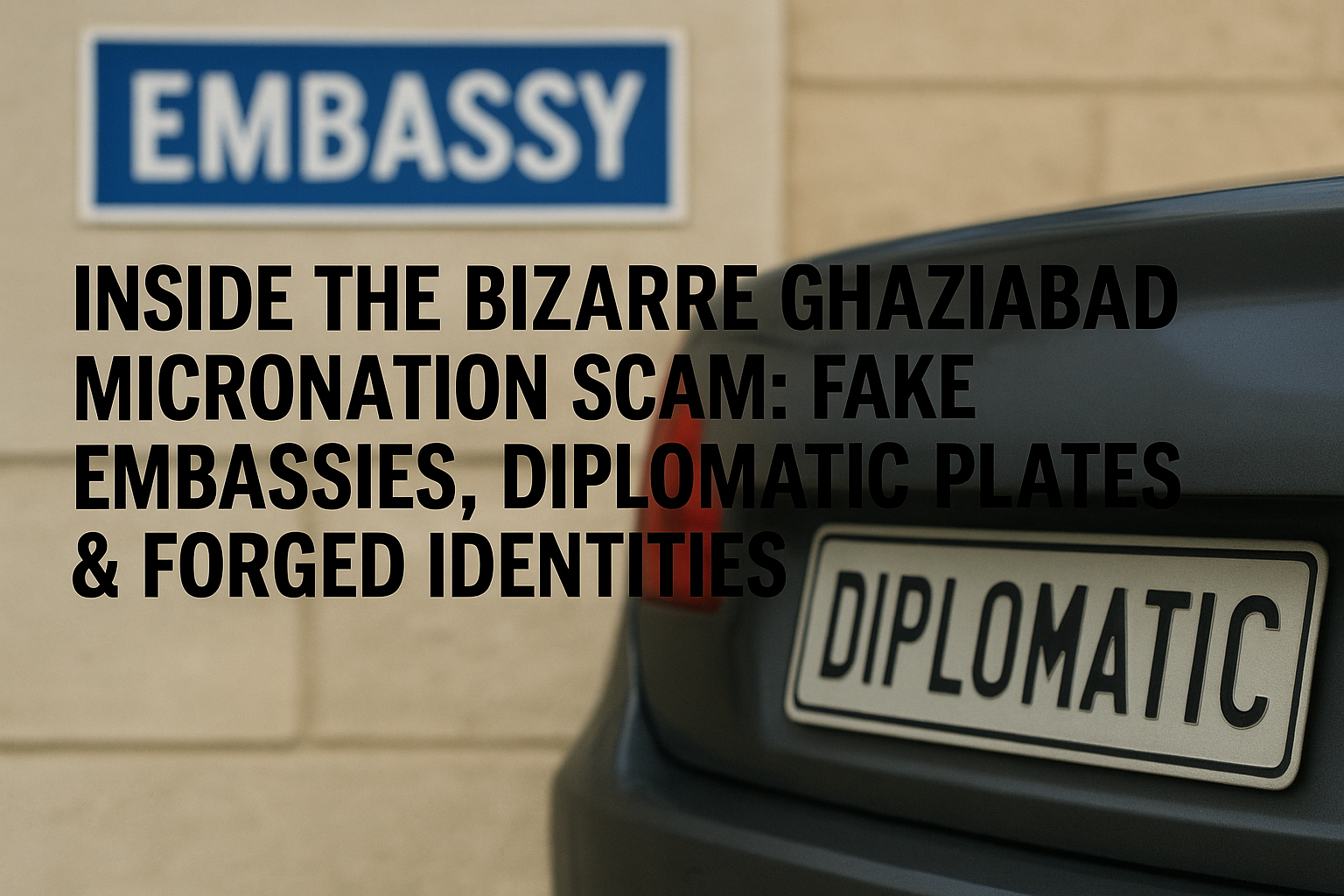

In a strange and deeply unsettling case emerging from the NCR, a man in Ghaziabad was found operating what appeared to be embassies for fictional “micronations”—countries that do not legally exist. The fake entities included names like the Principality of Seborga, West Arctica, and Lodonia. While these names may seem plucked from a fantasy novel, the scam itself was real—and meticulously executed.
According to officials, the accused had set up an entire ecosystem mimicking diplomatic infrastructure: fake registration plates marked “diplomatic”, forged diplomatic ID cards, foreign-looking documents, and even luxury items likely meant to impress or lure targets. The Uttar Pradesh Special Task Force (STF) conducted a high-level raid in Kavi Nagar, Ghaziabad, and uncovered this elaborate web of deceit.
Micronations are self-declared entities that claim sovereignty over territory but are not recognized by any government or international body such as the United Nations. Most are harmless hobbyist ventures or symbolic protests. However, some individuals exploit their existence to commit identity fraud, peddle false authority, or extract money from gullible victims.
Dr. Samir Ahuja, an international law expert based in Delhi, explains:
“The lack of global regulation around micronations creates a legal grey zone. Fraudsters manipulate that ambiguity to dress up scams with trappings of legitimacy—diplomatic badges, websites, or pseudo-royal titles.”
The micronations referenced in this scam include:
The case, first reported by The Times of India, revealed the following through the STF investigation:
| Element | Details |
|---|---|
| Location | Rented house in Kavi Nagar, Ghaziabad |
| Identity | Posed as a high-ranking diplomat |
| Assets Seized | Forged diplomatic documents, license plates, foreign-looking credentials, luxury watches |
| Referenced Micronations | Seborga, Lodonia, West Arctica |
| Suspected Motive | Targeting high-net-worth individuals with promises of diplomatic status or investment privileges |
Authorities believe that the suspect may have used the ruse to defraud individuals looking for quick global mobility, special business privileges, or the social cachet of a diplomatic title.
Ghaziabad, part of Delhi NCR, has grown rapidly in recent years as a residential and small-business hub. The relative anonymity of new colonies, combined with affordable rentals, creates opportunities for discreet operations—especially those that prey on public ignorance.
Retired IPS officer Rajeev Tyagi remarks:
“Scams like this thrive where there’s low awareness and low suspicion. A foreign flag and a fake badge are often enough to silence questioning neighbors. That’s what makes such areas vulnerable to symbolic fraud.“
Cases like this show how symbolic items—license plates, flags, badges, or foreign seals—are often enough to deceive the public. Here’s what to watch out for:
Indian law leaves no ambiguity on this front. Forging government IDs, using fraudulent license plates, and impersonating foreign officials are serious crimes under the Indian Penal Code (IPC). Furthermore:
The STF is now probing the possibility of wider links to money laundering, land fraud, and international cybercrime.
This scam targeted individuals seeking influence or international status. Here’s how to avoid such traps:
Globally, micronation-related scams have increased, particularly in parts of Africa and Southeast Asia. In 2019, a fake “Nigerian Embassy” was found operating in Ghana. Several online platforms also peddle “knighthood” titles and fake royal credentials for a fee.
Interpol has warned about such scams gaining traction online. The internet makes it easy to set up official-looking websites, register domain names like “.gov” or “.int” clones, and lure victims across borders.
According to cybercrime analyst Shruti Mehta:
“Micronation scams are a form of psychological fraud. They exploit vanity and ignorance—offering a fantasy of power in exchange for money or access.”
This incident serves as a timely reminder to residents of Ghaziabad, Noida, Gurugram, and East Delhi to stay vigilant. The NCR region, due to its size and diversity, often becomes a testing ground for new scam models—from call center fraud to fake investment schemes.
If you suspect any building, individual, or organization is operating under a false diplomatic pretense, report it to local police or the Ministry of External Affairs. A simple inquiry could prevent a larger fraud.
A man in Ghaziabad created fake embassies for unrecognized “micronations” like Seborga, West Arctica, and Lodonia. He used forged diplomatic IDs, fake registration plates, and documents to pose as a diplomat and possibly lure victims with false promises of diplomatic status or investment deals.
No, micronations are not officially recognized by any government or international body. They are often symbolic or satirical projects that claim sovereignty without legal standing.
The scammer rented a residential property in a quiet neighborhood in Kavi Nagar. He used foreign-looking documents, diplomatic-style number plates, and forged ID cards to maintain the illusion of legitimacy. The lack of public awareness about micronations may have helped him go unnoticed for some time.
Yes. Any unauthorized diplomatic activity, forgery of government IDs, and use of fake diplomatic symbols or plates are criminal offenses under Indian law. They can attract charges related to fraud, impersonation, and national security violations.
Residents should immediately report suspicious diplomatic claims, foreign flags, or unusual activity to the local police or Ministry of External Affairs. Verifying embassy legitimacy through official portals like mea.gov.in is strongly recommended.
Part of the NCR Guide editorial team, covering news, real estate, food and lifestyle across Delhi NCR.
Join thousands of Delhi NCR residents who start their day with our morning brief — top stories, real estate updates, events and deals.