
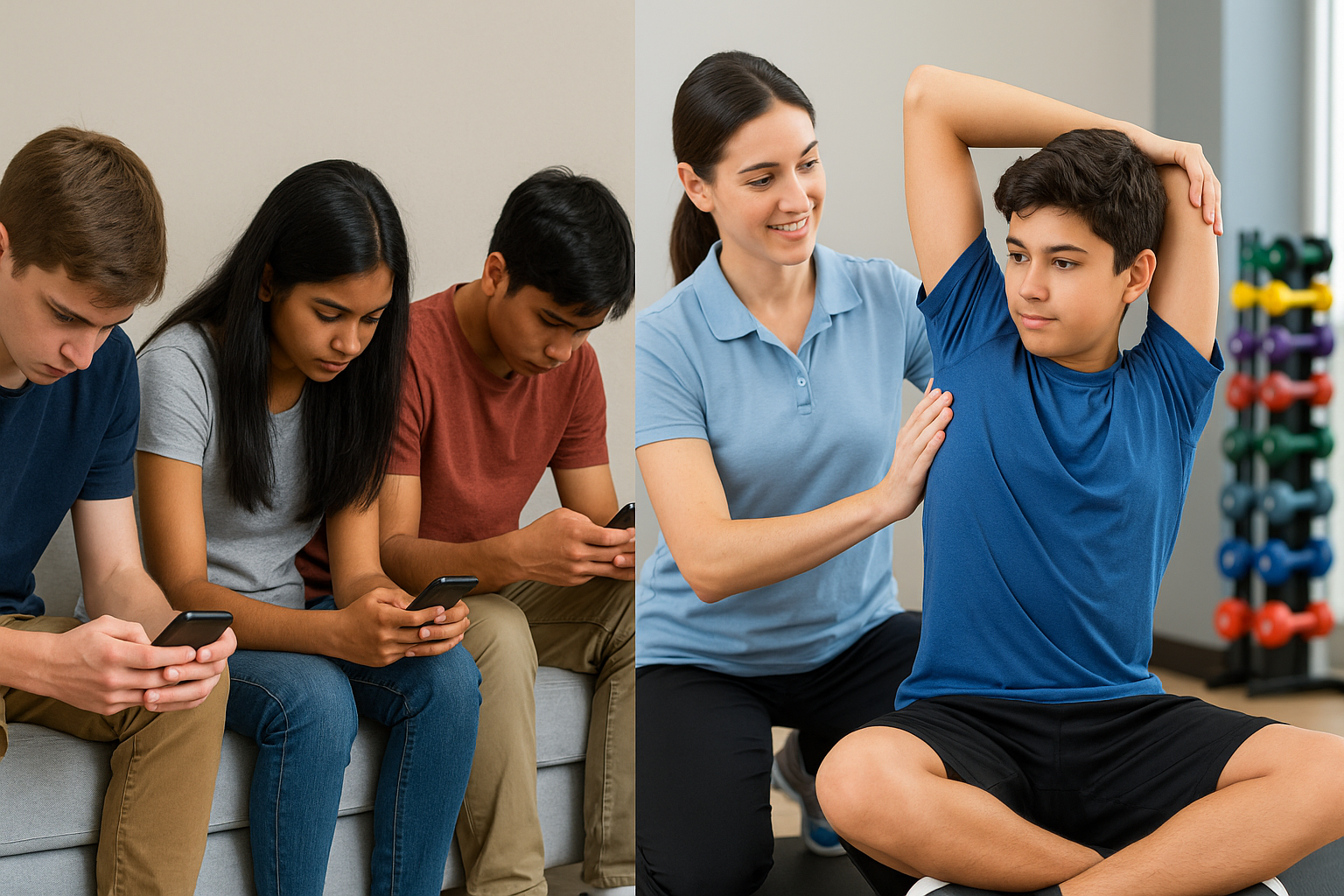

The lifestyle of teenagers is changing rapidly in India’s cities, with screens replacing playgrounds and long hours of passive device use taking over from active movement. A new study by the All India Institute of Medical Sciences (AIIMS), Delhi, has put data behind what many parents already suspect: today’s “slouch-sit-scroll” routine is hurting the physical health of adolescents in measurable ways.
Conducted between October 2023 and 2025 in collaboration with the Indian Council of Medical Research (ICMR), the research followed 380 students aged 15–18 years from two Delhi schools. It examined posture, flexibility, and musculoskeletal health and introduced physiotherapy-based interventions to test possible solutions.
The AIIMS study highlights how the combination of extended screen time, sedentary routines, and loss of traditional movement patterns is taking a toll on young bodies. Instead of spending time in natural physical activity, many teenagers spend their day slouched over smartphones, laptops, and tablets. This change in daily habits is linked to a growing list of health concerns:
For teenagers, these issues are particularly concerning because their bodies are still developing. Early musculoskeletal strain can have lifelong consequences if ignored.
Experts point to several reasons why today’s teens are experiencing problems at a scale that earlier generations did not:
This combination has created what doctors describe as a “generation at risk”—young people who may appear healthy on the outside but are already showing early signs of lifestyle-related musculoskeletal stress.
The AIIMS study went beyond observation by introducing a 12-week physiotherapy program. Students were guided through exercises to correct posture, improve flexibility, and strengthen supporting muscles. The results were encouraging:
These findings confirm that targeted interventions can reverse or mitigate damage caused by sedentary habits. However, physiotherapy works best as part of a broader lifestyle shift. Without changes in daily routines—like balancing screen use, encouraging regular physical activity, and teaching posture awareness—the benefits may be short-lived.
Parents are at the frontline of this issue. Small adjustments at home can help counterbalance gadget-driven lifestyles:
By combining awareness with everyday practices, families can reduce the risks identified in the study and support healthier growth for their children.
The study also calls attention to the role of educational institutions. Since students spend most of their day at school, interventions there can make a significant difference. Experts recommend:
If schools embrace these strategies, they can help counterbalance the pressures of digital education and ensure students grow up healthier.
The most important lesson from the AIIMS study is that the problem is real but reversible. Teenagers may not notice the discomfort now, but their bodies are already showing stress signals. If ignored, these could translate into chronic pain, reduced mobility, and long-term health risks in adulthood.
The path forward lies in balance—balancing digital learning with outdoor play, balancing gadget use with active movement, and balancing modern lifestyles with traditional practices that promoted natural flexibility. Parents, schools, and policymakers all have a role in creating that balance.
By taking action now, Delhi’s teenagers—and millions of others across the country—can look forward to healthier, stronger, and more resilient futures.
The study by AIIMS, with ICMR support, examined how prolonged screen time and sedentary habits affect the posture, flexibility, and musculoskeletal health of teenagers aged 15–18.
The research covered 380 students from two private schools in Delhi between 2023 and 2025.
The study found forward head posture, rounded shoulders, neck and back pain, tight hamstrings, IT band stiffness, flat feet, and reduced flexibility.
Excessive screen time, less outdoor play, fewer barefoot activities, and skipping warm-ups before sports are key factors making teens more vulnerable.
Yes. A 12-week physiotherapy program in the study showed significant improvements in posture, flexibility, and muscle strength.
Parents can limit screen use, promote outdoor play, encourage posture-friendly sitting, ensure warm-ups before sports, and create ergonomic study spaces at home.
Schools can integrate physical activity breaks, posture awareness programs, and physiotherapy or wellness sessions into their daily routines to reduce risks.
No. Experts say the problems are reversible if addressed early with physiotherapy, posture training, and lifestyle changes that balance screen time with active movement.
Part of the NCR Guide editorial team, covering news, real estate, food and lifestyle across Delhi NCR.
Join thousands of Delhi NCR residents who start their day with our morning brief — top stories, real estate updates, events and deals.