
Delhi continues to grapple with a persistent smog crisis, with the average Air Quality Index hovering around 350, placing the city firmly in the very poor category. Data from monitoring stations shows that 11 areas across Delhi recorded severe AQI levels, indicating that pollution remains widespread and entrenched despite minor day-to-day fluctuations.
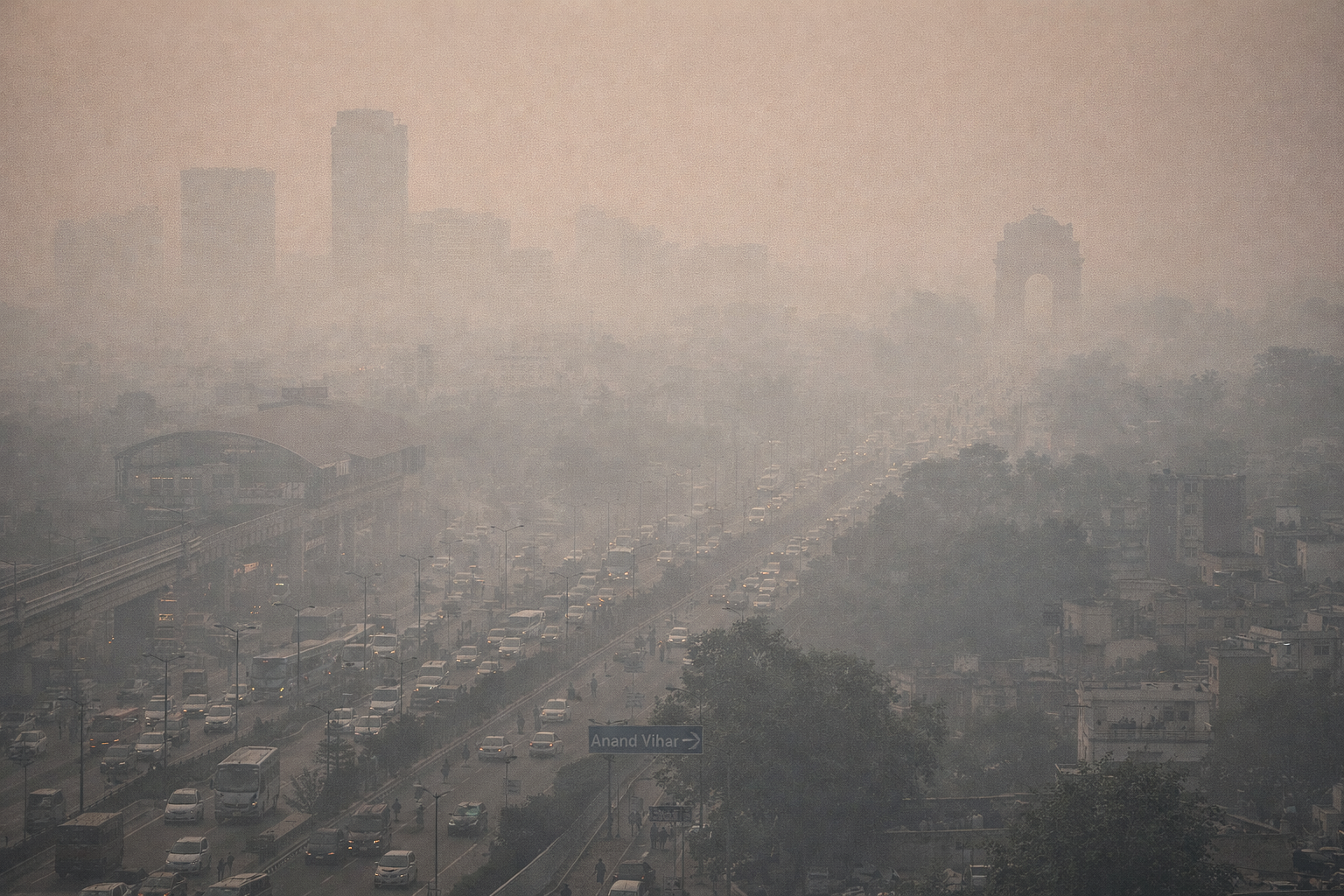
Dense smog has lingered across the capital through the day, reducing visibility and affecting daily routines for residents across multiple districts.
Air quality monitoring indicates that several pockets across East, North, and Central Delhi remain among the worst affected. In these areas, AQI readings have crossed into the severe category, a level at which health risks extend beyond vulnerable groups to the general population.
Experts attribute the sustained high readings to stagnant winter conditions, low wind speed, and fog trapping pollutants close to the ground, especially during early morning and late evening hours.
The ongoing smog has continued to disrupt everyday movement across the city. Visibility on roads has remained low, prompting traffic advisories and cautious driving recommendations.
Air travel has also been affected, with flight cancellations and delays reported at Indira Gandhi International Airport due to low visibility linked to fog and pollution. Airlines have advised passengers to monitor flight status closely, particularly for early morning departures.
Medical professionals have reiterated warnings for residents to limit outdoor exposure, avoid strenuous physical activity outside, and take protective measures when stepping out. Children, senior citizens, and people with respiratory or cardiac conditions remain at higher risk during prolonged exposure to polluted air.
Doctors have cautioned that even short periods outdoors during severe or very poor AQI phases can trigger breathing discomfort, eye irritation, and fatigue.
Authorities continue to monitor air quality trends and weather patterns closely. With winter conditions expected to persist, officials have indicated that pollution levels may remain elevated until there is a significant change in wind or dispersion conditions.
Residents are advised to stay informed through daily air quality updates and plan travel, school routines, and outdoor activities accordingly.
An AQI near 350 falls in the very poor category, indicating high pollutant concentration that can affect health, particularly for children, older adults, and people with existing health conditions.
Recent data shows that 11 areas across the city have recorded AQI levels in the severe range, reflecting widespread pollution rather than isolated hotspots.
Yes. Low visibility caused by smog and fog has led to flight delays and cancellations, along with traffic advisories across major roads in Delhi.
Residents should limit outdoor activity, avoid exercise outside, wear protective masks if travel is unavoidable, and follow official health advisories.
Air quality may fluctuate daily, but sustained improvement usually depends on changes in weather conditions, such as stronger winds or rainfall.
Part of the NCR Guide editorial team, covering news, real estate, food and lifestyle across Delhi NCR.
Join thousands of Delhi NCR residents who start their day with our morning brief — top stories, real estate updates, events and deals.