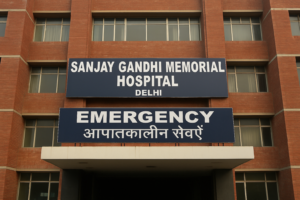


The Municipal Corporation of Delhi has rolled out a cashless healthcare scheme for its employees and pensioners, bringing them under the coverage of the Central Government Health Scheme. The move is aimed at reducing out-of-pocket medical expenses and improving access to quality treatment for thousands of civic workers and retirees.
Officials said the scheme addresses a long-standing demand for structured, cashless medical support within the municipal workforce.
Under the new arrangement, eligible MCD employees and pensioners can avail cashless treatment at CGHS-empanelled hospitals for approved medical procedures. This removes the need for upfront payments and subsequent reimbursement claims, which often caused delays and financial stress.
The coverage applies to serving employees as well as retired staff, extending healthcare security beyond active service years.
CGHS is a central government healthcare programme that provides medical services through:
• Government-run dispensaries
• CGHS wellness centres
• Empanelled private hospitals
Under the cashless model, beneficiaries receive treatment at authorised facilities, with bills settled directly as per CGHS rates and guidelines.
For MCD employees, this marks a shift from fragmented or reimbursement-based healthcare access to a standardised national health framework.
Municipal employees often work in demanding environments, including sanitation, field services, and public infrastructure maintenance. Health-related expenses have been a recurring concern, particularly for pensioners and lower-income staff.
By adopting CGHS coverage, the MCD aims to:
• Reduce financial burden during medical emergencies
• Improve access to specialised treatment
• Ensure continuity of care for retirees
• Streamline administrative healthcare processes
Officials described the move as a welfare-oriented reform, rather than a cosmetic policy change.
Before this rollout, many MCD employees relied on:
• Limited in-house medical facilities
• Reimbursement-based treatment models
• Out-of-pocket payments followed by claims
These systems often involved paperwork, delayed reimbursements, and uncertainty around coverage limits. The CGHS-linked cashless system is expected to simplify access and reduce procedural hurdles.
Employees and pensioners can seek treatment at CGHS-empanelled hospitals across Delhi and NCR, subject to scheme guidelines. Coverage includes consultations, diagnostics, hospitalisation, and approved procedures as notified under CGHS norms.
Officials said further communication will be issued to employees detailing:
• Hospital lists
• Eligibility criteria
• Required documentation
• Operational start dates
Employee unions and welfare groups have welcomed the move, noting that healthcare costs often rise sharply after retirement. Pensioners, in particular, stand to benefit from predictable and cashless access to treatment, without navigating reimbursement processes.
Serving employees are also expected to benefit from faster treatment decisions and reduced financial uncertainty during medical emergencies.
The MCD is expected to issue detailed operational guidelines on enrolment, card issuance, and hospital access in the coming days. Departments have been instructed to facilitate a smooth transition to the CGHS framework.
Officials said the rollout will be monitored closely to address implementation issues and ensure that beneficiaries can access services without disruption.
The scheme covers serving employees and pensioners of the Municipal Corporation of Delhi, allowing them to access healthcare benefits under the CGHS framework.
Cashless treatment means eligible employees and pensioners do not need to pay hospital bills upfront for approved treatments at CGHS-empanelled hospitals. Bills are settled directly as per CGHS norms.
Beneficiaries can seek treatment at CGHS-empanelled government and private hospitals across Delhi and NCR, subject to CGHS guidelines and approved procedures.
Yes. The scheme explicitly includes retired MCD employees and pensioners, ensuring continued healthcare access after retirement.
Coverage typically includes consultations, diagnostics, hospitalisation, and approved medical procedures, as notified under CGHS rules. Specific inclusions depend on CGHS rate lists and approvals.
For certain procedures or hospitalisations, prior approval may be required, as per CGHS guidelines. Emergency treatments are handled differently, with approvals processed subsequently.
The MCD has announced the rollout of the scheme, and detailed operational instructions including start dates, enrolment steps, and documentation are expected to be issued shortly.
Beneficiaries are likely to require CGHS cards or identification, service or pension details, and valid ID proof, as specified in forthcoming MCD guidelines.
Earlier systems often relied on reimbursement after payment, involving paperwork and delays. The new CGHS-linked scheme offers direct, cashless access, reducing financial and administrative burden.
MCD employees and pensioners should follow official circulars, departmental notices, and internal communications from the corporation for detailed instructions and updates.
Part of the NCR Guide editorial team, covering news, real estate, food and lifestyle across Delhi NCR.
Join thousands of Delhi NCR residents who start their day with our morning brief — top stories, real estate updates, events and deals.