
China has rejected India’s claims over the Shaksgam Valley and defended infrastructure activity linked to the China-Pakistan Economic Corridor, sharpening a long-running diplomatic dispute involving India, China, and Pakistan.
Beijing’s statement, issued in response to India’s objections, reiterates that the projects are legitimate and part of bilateral cooperation with Pakistan, a position New Delhi has consistently rejected.
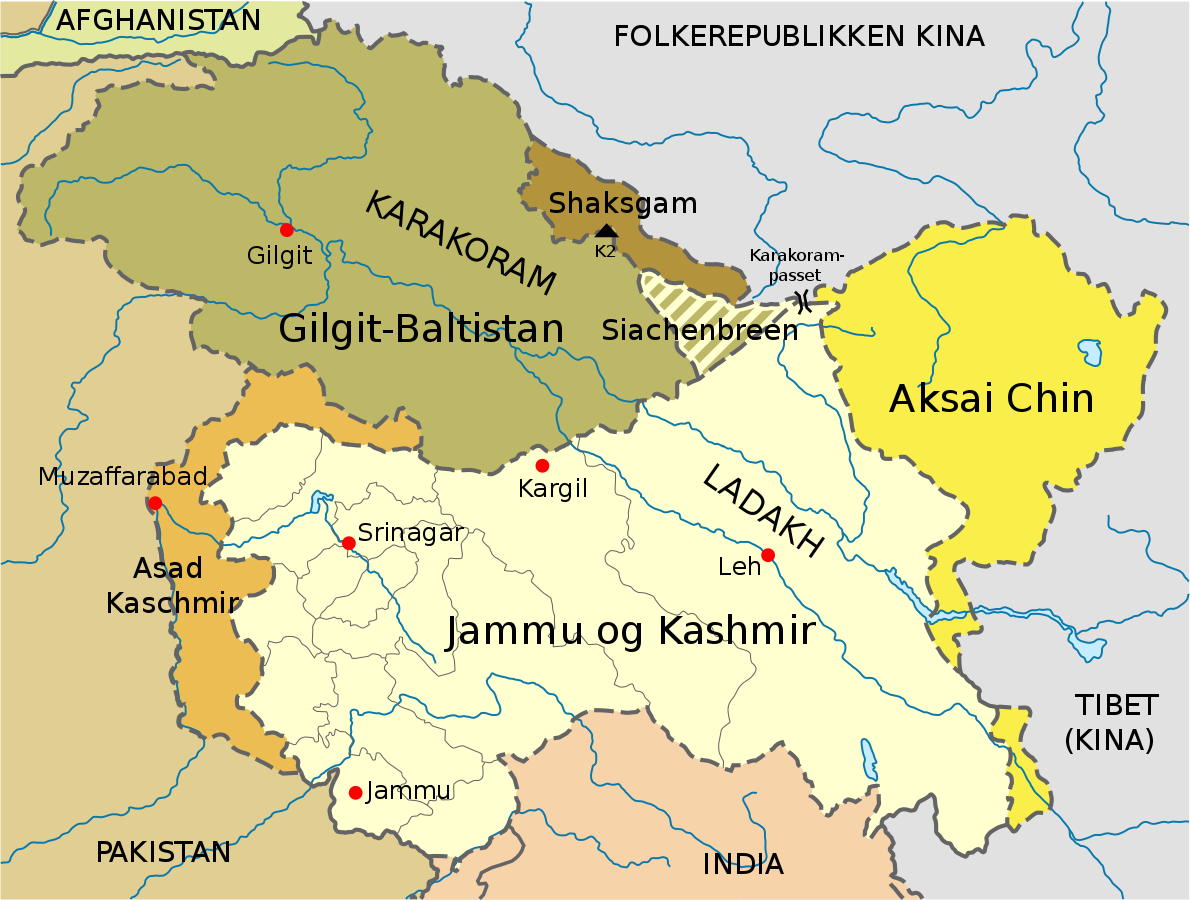
The Shaksgam Valley is a sparsely populated but strategically important region located north of the Siachen area, in territory India considers part of the erstwhile princely state of Jammu and Kashmir. India maintains that the valley is illegally occupied, while Pakistan transferred control of the area to China under a 1963 agreement that India does not recognise.
Although remote, the region holds strategic value due to its proximity to sensitive borders and its role in regional connectivity projects.
China has stated that infrastructure activity in the region is lawful and based on long-standing arrangements with Pakistan. By rejecting India’s claim, Beijing has made it clear that it does not accept New Delhi’s legal position on the status of the territory.
Chinese officials have also linked the projects to broader economic development goals, framing them as civilian infrastructure rather than strategic or military activity.
India has repeatedly objected to any third-country activity in territories it claims as its own. From New Delhi’s perspective, infrastructure projects linked to CPEC violate India’s sovereignty and undermine its territorial integrity.
Indian officials have stressed that no amount of infrastructure development can legitimise what India considers illegal occupation, and that such projects carry security implications beyond their stated economic purpose.
CPEC is a flagship component of China’s Belt and Road Initiative, designed to link western China with ports in Pakistan through a network of roads, railways, and energy projects.
For India, the corridor’s passage through disputed territory transforms it from a purely economic project into a strategic concern. For China and Pakistan, it represents a key pillar of regional cooperation. This fundamental divergence ensures that CPEC continues to be a persistent source of diplomatic friction.
The renewed exchange comes at a time when India-China relations remain sensitive, following years of border tensions and unresolved disputes along the Line of Actual Control. Infrastructure development in contested regions is increasingly viewed through a strategic lens rather than a commercial one.
Each public statement on Shaksgam Valley reflects entrenched positions rather than movement toward resolution.
There is no indication of immediate escalation on the ground. However, the dispute is likely to resurface whenever new infrastructure projects are announced or referenced in diplomatic forums.
Observers will be watching for:
• Further CPEC-related announcements in the region
• India’s diplomatic engagement on the issue at international platforms
• Signals of how China balances infrastructure expansion with regional sensitivities
The Shaksgam Valley row highlights a broader reality of contemporary geopolitics: territorial disputes involving major powers are shaped as much by infrastructure and influence as by maps and treaties.
China’s rejection of India’s claim underscores the limits of diplomatic protest in altering ground realities, while reinforcing why sovereignty and connectivity projects remain deeply intertwined in the region.
The dispute centres on Shaksgam Valley, a remote but strategic region that India considers part of the former princely state of Jammu and Kashmir. Pakistan ceded control of the area to China in 1963 under an agreement that India does not recognise, making any third-party activity there unacceptable to New Delhi.
China has reiterated its long-standing position after India objected to infrastructure projects linked to the China-Pakistan Economic Corridor. Beijing maintains that the projects are lawful and based on bilateral arrangements with Pakistan, rejecting India’s sovereignty claim.
The China-Pakistan Economic Corridor involves large infrastructure investments across Pakistan-administered regions. India objects to CPEC because parts of the corridor pass through territory it claims as its own, including areas connected to the Shaksgam Valley region.
India maintains that the entire region of the former princely state of Jammu and Kashmir is an integral part of India. It considers any infrastructure or development activity by third countries in these areas illegal and a violation of its sovereignty.
Despite being sparsely populated, the valley lies close to sensitive borders and key mountain regions. Infrastructure development there has implications for regional connectivity, security planning, and long-term strategic influence.
At present, there is no indication of immediate military escalation. The dispute is being played out through diplomatic statements and political signalling rather than ground-level confrontation.
Pakistan supports China’s position, treating the area as part of territory it administers and framing CPEC projects as economic and developmental in nature.
The episode reflects broader tensions between China and India, particularly over borders and infrastructure in contested regions. It adds to an already complex relationship marked by strategic rivalry and unresolved disputes.
While diplomatic engagement continues, the fundamental legal positions of the three countries remain far apart. Any resolution would require broader political agreements, not just statements or project-level discussions.
The Shaksgam Valley row highlights how infrastructure projects, sovereignty claims, and regional power dynamics intersect. It offers insight into why border disputes involving major powers tend to persist and resurface over time rather than being settled quickly.
Part of the NCR Guide editorial team, covering news, real estate, food and lifestyle across Delhi NCR.
Join thousands of Delhi NCR residents who start their day with our morning brief — top stories, real estate updates, events and deals.