
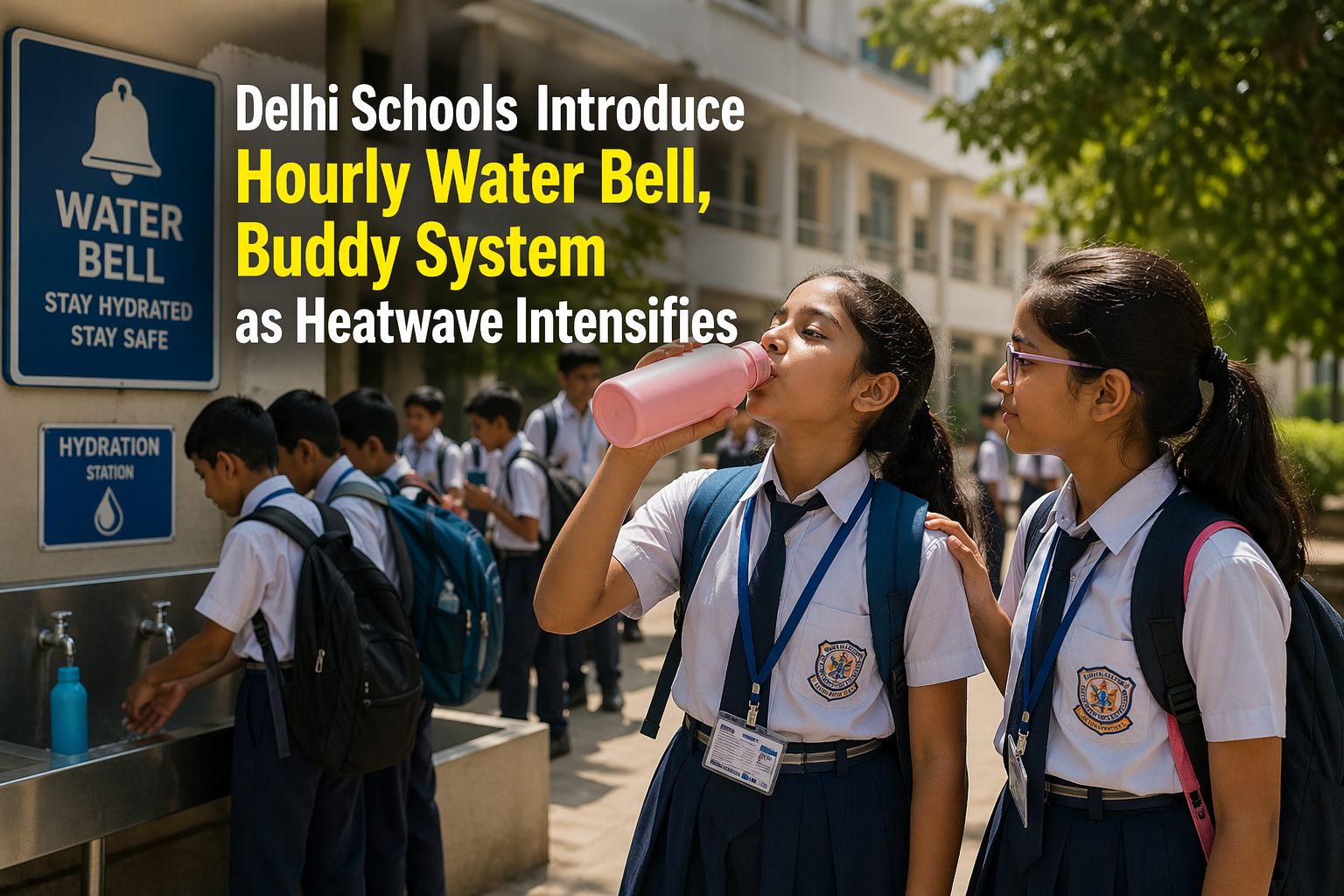

As Delhi braces for another spell of extreme heat, schools across the city have been asked to take immediate preventive steps to protect students. Authorities have directed schools to ring a “water bell” every hour and introduce a buddy system, turning hydration and peer monitoring into part of the daily routine.
The idea is simple, but the intent is serious: reduce the risk of dehydration and heat-related illness before it becomes a medical concern.
The water bell is not a new class or activity. It is a structured reminder built into the school day, prompting students to drink water every hour.
In normal conditions, many children ignore thirst, especially during classes or play. In a heatwave, that delay can quickly lead to fatigue or dehydration. This system removes that gap by making hydration a habit, not a choice.
The buddy system pairs students so they can look out for each other during school hours. If a child feels uneasy, dizzy, or unusually tired, their buddy is expected to alert a teacher immediately.
It may sound basic, but in crowded classrooms and playgrounds, early signs often go unnoticed. Peer awareness adds a practical layer of safety that teachers alone cannot always provide.
Delhi is already seeing rising temperatures and early heatwave conditions, and children are among the most vulnerable.
Unlike adults, younger students may not:
That is where structured systems like these become critical. They are less about discipline and more about prevention.
For most students, the change will feel subtle but consistent.
There will be frequent pauses for water intake, and teachers are likely to be more attentive to signs of discomfort. The buddy system will also make students more aware of each other’s well-being.
It does not disrupt learning, but it does shift the focus slightly toward health and safety during peak summer weeks.
School-level steps work best when supported at home.
Parents should make sure children leave for school:
It also helps to talk to children about how they feel during the day. Many symptoms of heat stress are mild at first but become serious if ignored.
Early signs are often easy to miss.
Watch for tiredness, headache, dizziness, nausea, or unusual irritability. These may appear before more serious symptoms develop.
The key is not to wait. Even mild discomfort in extreme heat should be taken seriously.
The introduction of a water bell and buddy system may seem like minor adjustments, but they reflect a larger reality. Schools are adapting to more frequent and intense heat conditions, where routine precautions are no longer enough.
What used to be seasonal advice is now becoming part of everyday school planning.
It is an hourly reminder for students to drink water regularly during school hours, aimed at preventing dehydration.
Students are paired so they can monitor each other’s health and report any signs of discomfort quickly.
They come in response to heatwave conditions in Delhi, where children face a higher risk of dehydration and heat exhaustion.
Children should carry adequate water, wear light clothing, and avoid heavy meals before school.
Common signs include fatigue, dizziness, headache, nausea, and unusual weakness.
Part of the NCR Guide editorial team, covering news, real estate, food and lifestyle across Delhi NCR.
Join thousands of Delhi NCR residents who start their day with our morning brief — top stories, real estate updates, events and deals.