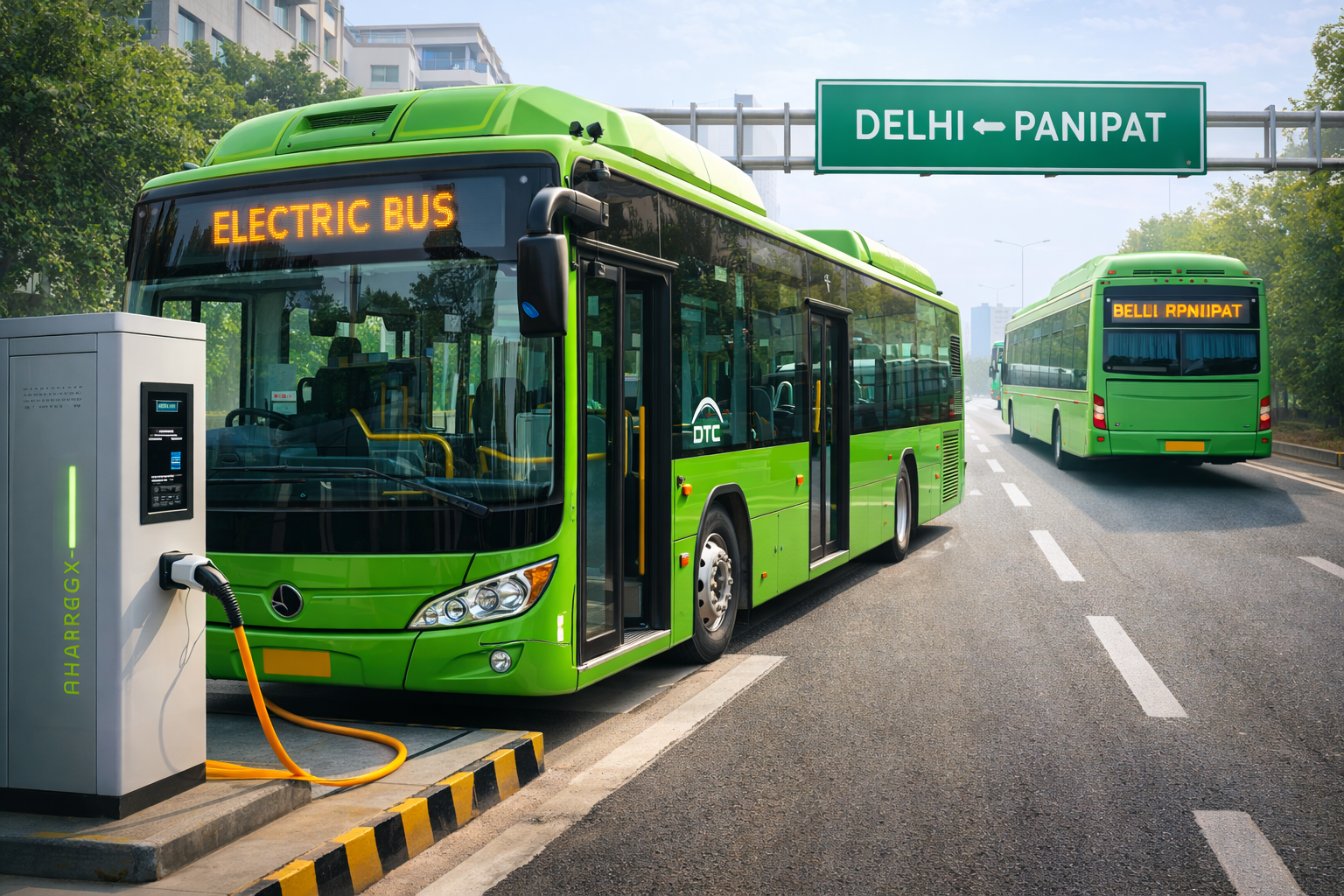

Delhi has taken another major step toward cleaner and more connected public transport with the induction of 500 new electric buses into its city fleet and the launch of a direct bus service between Delhi and Panipat. The twin announcements are part of the capital’s broader push to expand electric mobility while improving regional connectivity across NCR and neighbouring districts.
Officials said the move is aimed at strengthening last-mile connectivity within Delhi and offering a reliable public transport option for daily intercity commuters.
The newly inducted electric buses will be deployed across multiple routes in the city, adding significant capacity to Delhi’s existing electric bus fleet. The focus is on high-density corridors and residential-to-commercial routes, where demand for clean and frequent public transport remains high.
According to transport officials, the buses are designed to reduce emissions, lower operating noise, and improve commuter comfort. Each induction phase is also linked to the expansion of charging infrastructure, ensuring operational continuity across depots and terminals.
Electric buses form a key pillar of Delhi’s clean mobility roadmap. With road transport being a major contributor to urban air pollution, scaling up zero-emission public transport is seen as a long-term solution rather than a short-term fix.
Officials have reiterated that while environmental benefits will accrue over time, the immediate gains include:
• Reduced fuel costs
• Quieter city roads
• Lower maintenance requirements
• Improved travel experience for commuters
Alongside the city fleet expansion, Delhi has launched a direct bus service connecting the capital with Panipat, strengthening intercity connectivity with Haryana. The service is expected to benefit office-goers, students, and traders who travel frequently between the two cities.
The route offers a structured public transport alternative to private vehicles and informal travel options, helping reduce congestion on highways linking Delhi with northern NCR towns.
Transport officials said the Panipat service will operate on fixed schedules, with an emphasis on punctuality and safety. Over time, frequency may be adjusted based on passenger demand.
For Delhi commuters, the induction of electric buses is expected to:
• Reduce waiting times on busy routes
• Improve service reliability
• Support smoother peak-hour operations
The electric bus rollout and intercity service are part of Delhi’s wider plan to modernise public transport through:
• Gradual electrification of the bus fleet
• Expansion of depot and charging capacity
• Improved regional bus connectivity across NCR
Officials indicated that more intercity routes may be added in future phases, depending on commuter demand and coordination with neighbouring states.
Transport authorities will now focus on route deployment, driver training, and infrastructure readiness to ensure the newly inducted buses are fully operational. Performance data, including ridership and service reliability, will be monitored to guide future expansions.
For commuters, the coming weeks will determine how quickly the new buses translate into shorter waits and smoother daily travel.
For Delhi and NCR residents, the announcement represents more than just new buses. It signals a gradual shift toward cleaner, more dependable public transport, while acknowledging the growing need for seamless intercity travel in an expanding metropolitan region.
As electric mobility scales up and regional routes improve, public transport is expected to play a larger role in reducing congestion and making daily travel more predictable for millions.
Delhi has inducted 500 new electric buses into its public transport system as part of its ongoing clean mobility programme.
The buses will be deployed across high-demand city routes, particularly on residential-to-commercial corridors and areas with heavy daily ridership. Route-wise details are expected to be updated by transport authorities as deployment progresses.
The rollout is part of a gradual transition. Some older buses may be phased out over time, while others will continue to operate alongside electric buses to meet peak demand.
Electric buses offer quieter rides, lower emissions, smoother acceleration, and are designed to improve overall travel comfort. Over time, they are also expected to improve service reliability.
Delhi has launched a direct intercity bus service connecting Delhi and Panipat, aimed at improving daily travel options for office-goers, students, and frequent intercity commuters.
The service is particularly useful for daily commuters, business travellers, and students who regularly travel between Delhi and Panipat and rely on affordable, scheduled public transport.
Authorities have indicated that the service will run on fixed schedules, with frequency adjusted based on demand. Fare details and timings are typically notified by transport agencies and may evolve over time.
While Delhi is expanding its electric fleet within the city, intercity services may operate using different bus types depending on route length and operational requirements.
While immediate impact data is not yet available, scaling up zero-emission buses is expected to reduce transport-related pollution over time, especially on high-traffic routes.
Transport authorities will focus on route deployment, charging infrastructure readiness, and performance monitoring. Based on ridership and operational data, more electric buses and intercity routes may be added in future phases.
Part of the NCR Guide editorial team, covering news, real estate, food and lifestyle across Delhi NCR.
Join thousands of Delhi NCR residents who start their day with our morning brief — top stories, real estate updates, events and deals.