

New Delhi, November 7, 2025:
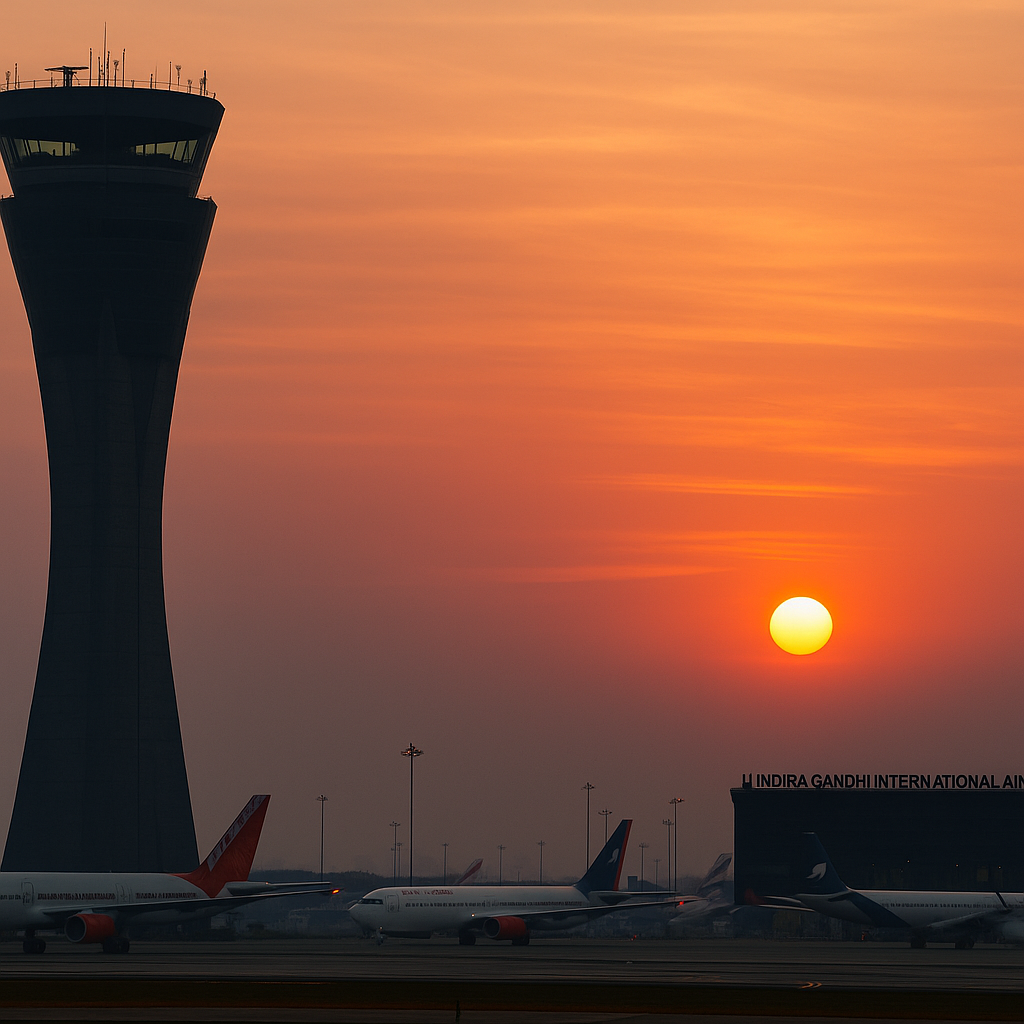
Hundreds of passengers at Indira Gandhi International (IGI) Airport faced long delays on Thursday morning after a technical glitch in the Air Traffic Control (ATC) system disrupted flight operations for nearly two hours. The malfunction, which began around 8:15 a.m., halted takeoffs and landings and caused cascading delays across several domestic and international routes.
Officials from the Airports Authority of India (AAI) confirmed that the glitch was traced to a software synchronization failure between radar and communication servers. Normal operations resumed by 10:30 a.m., but the backlog continued to affect schedules through the day.
The glitch was detected in the radar integration system, which tracks aircraft movement in real time and ensures coordination between controllers and pilots. Once the fault was detected, controllers temporarily stopped issuing clearances for takeoff and landing as a safety precaution.
Flights already in Delhi airspace were placed in holding patterns, while arrivals from Mumbai, Bengaluru, and Kolkata faced delays of 30–60 minutes. Departures were held at gates to avoid congestion on taxiways.
Ground handling, baggage loading, and boarding were also delayed due to cascading effects across terminals.
By mid-morning, departure halls were crowded with travelers awaiting updates. Airlines including IndiGo, Air India, and Vistara issued advisories urging passengers to check real-time flight status before heading to the airport.
“Our flight to Chennai was delayed by two hours, but airline staff managed it professionally,” said a passenger at Terminal 3.
Air India confirmed that during the disruption, controllers coordinated manually with pilots to maintain essential traffic flow until systems were restored.Cause, Investigation, and Clarifications
Technical teams from AAI and Bharat Electronics Limited (BEL) worked on-site to restore connectivity. Officials clarified that the disruption stemmed from a software synchronization issue, ruling out power failure or any confirmed cyberattack.
Following initial confusion online, some users speculated whether GPS spoofing—the falsification of satellite signals to mislead aircraft or systems—could have been involved. Authorities have found no evidence to support that theory.
Experts explained that ATC radar and communication systems operate independently of aircraft GPS signals. “A GPS spoofing attempt would primarily affect an aircraft’s onboard navigation, not ATC radar servers,” said an aviation safety consultant familiar with the investigation.
AAI officials reiterated that all indications point to an internal system fault rather than external interference. The DGCA has ordered a detailed review to verify the cause and strengthen backup redundancies.
Over 120 flights were affected, including international connections to Dubai, Singapore, and London. The Delhi–Mumbai corridor—one of the world’s busiest routes—experienced spillover congestion, with delays reported at Jaipur, Lucknow, and Ahmedabad airports.
Airlines said that it could take up to 24 hours for complete normalization as aircraft rotations and crew schedules were readjusted.
Officials said the disruption, though inconvenient, demonstrated the robustness of aviation safeguards. “The fail-safes worked exactly as designed,” said an AAI source. “Controllers halted movement the moment synchronization failed—safety came first.”
The incident has renewed calls for upgrading India’s ATC technology, which currently manages more than 2,000 daily flights in Delhi’s airspace. Experts have recommended investments in redundant radar units, AI-based traffic management tools, and real-time data mirroring to minimize downtime in case of future failures.
Travelers were advised to:
This marks the first significant ATC glitch at Delhi Airport since 2022. Aviation analysts say it underscores both the complexity of modern flight control systems and the importance of cyber-resilient infrastructure as India’s aviation sector expands rapidly.
Industry observers believe this incident will prompt a broader audit of ATC systems across major metros, ensuring that even short disruptions do not lead to cascading network delays.
The delays were triggered by a technical glitch in the Air Traffic Control (ATC) system at Indira Gandhi International Airport. Officials confirmed that a software synchronization failure between radar and communication servers disrupted flight operations for nearly two hours.
The glitch began around 8:15 a.m. and was resolved by 10:30 a.m. Although flight movements resumed afterward, backlogs and cascading delays affected schedules through the afternoon.
No. Officials clarified that flight safety was never at risk. Controllers temporarily paused takeoffs and landings as a precaution until radar synchronization was restored. The system’s fail-safes worked as intended to protect passenger safety.
Authorities have found no evidence of GPS spoofing or any form of cyberattack. Experts explained that ATC radar systems operate separately from aircraft GPS navigation, making spoofing an unlikely cause. The failure was linked to internal software synchronization, not external interference.
Over 120 flights were impacted, including both domestic and international routes. Delays ranged between 30 minutes and two hours, particularly affecting flights to Mumbai, Bengaluru, Dubai, and Singapore.
Airlines including IndiGo, Air India, and Vistara issued real-time advisories and temporarily shifted to manual coordination with ATC to maintain limited movement. Passengers were advised to monitor flight status through official airline apps and websites.
Airlines provided rebooking options, refreshments, and support at airport counters for affected travelers. Passengers experiencing significant delays or missed connections were accommodated on the next available flights.
The Directorate General of Civil Aviation (DGCA) has requested a full technical report from the Airports Authority of India (AAI). Recommendations include adding redundant radar systems, improving real-time data backups, and upgrading ATC server infrastructure to minimize single-point failures.
Officials said it may take up to 24 hours for complete normalization due to aircraft repositioning and crew scheduling adjustments. Passengers are advised to check flight status before heading to the airport.
Part of the NCR Guide editorial team, covering news, real estate, food and lifestyle across Delhi NCR.
Join thousands of Delhi NCR residents who start their day with our morning brief — top stories, real estate updates, events and deals.