
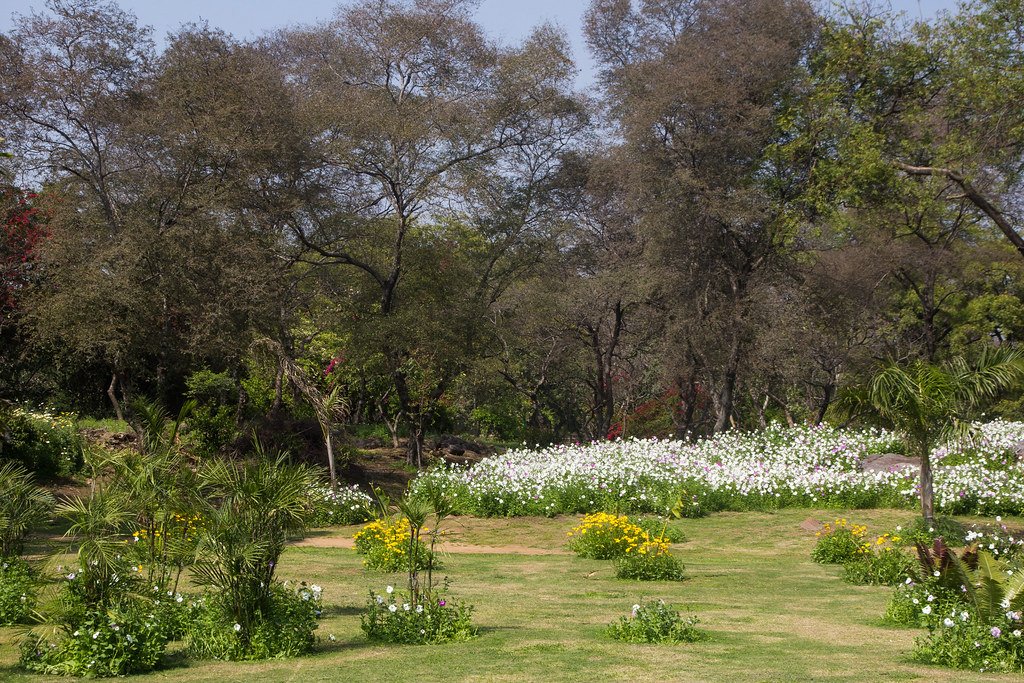

Delhi’s Central Ridge forest, spread across 864 hectares, has been dominated for nearly a century by the vilayati kikar tree (Prosopis juliflora), an invasive species from South and Central America. Its dense canopy blocks sunlight, limiting the growth of native plants and reducing biodiversity. The tree also consumes large amounts of groundwater, impacting the local water table.
In 2022, the Forest Department initiated a pilot project restoring 70 hectares in three patches by pruning vilayati kikar branches every six months. This canopy lifting allows sunlight to reach native saplings planted beneath the invasive trees, encouraging their growth.
Experts warn that pruning alone may not restore the forest effectively. Environmentalist Pradip Krishen highlights that vilayati kikar makes up over 95% of trees on the Ridge, meaning selective removal by authorized forest officials is essential. He also stresses planting native species like the dhau tree (Terminalia pendula), which thrive naturally in this environment.
Vilayati kikar’s roots rapidly absorb rainwater and groundwater, leaving little for native trees. The species also releases chemicals harmful to surrounding plants, disrupting the ecosystem balance and reducing forest diversity.
Mangar Bani, a sacred grove in Haryana, serves as a reference site representing what a natural forest in the northern Aravali region should look like. It’s dominated by native trees like dhau, offering a blueprint for restoration efforts in Central Ridge.
The Forest Department is collaborating with the Forest Research Institute to prepare a decade-long working plan, aiming for systematic ecological restoration and biodiversity enrichment across Delhi’s forests. This strategy will help restore ecological services like groundwater recharge, weather buffering, and urban recreation.
The Central Ridge forest restoration project aims to reduce invasive vilayati kikar trees by pruning their canopy and planting native species to restore biodiversity and ecological balance across 70 hectares of the forest.
Vilayati kikar blocks sunlight, quickly depletes groundwater, and releases chemicals that hinder the growth of native plants, leading to reduced biodiversity and forest degradation.
Canopy lifting involves pruning the branches of invasive vilayati kikar to allow sunlight to reach native saplings planted underneath, promoting their growth and gradually restoring native vegetation.
The dhau tree (Terminalia pendula) is among the native species recommended as it is well-adapted to the local soil and climate, supporting better forest ecosystem recovery.
Mangar Bani, a sacred grove in Haryana, serves as a natural reference forest, providing insights into native species composition and forest density, guiding restoration efforts in Delhi’s Central Ridge.
The Forest Department, in collaboration with the Forest Research Institute, is preparing a decade-long working plan to systematically restore Delhi’s forests by combating invasive species and enriching biodiversity.
Part of the NCR Guide editorial team, covering news, real estate, food and lifestyle across Delhi NCR.
Join thousands of Delhi NCR residents who start their day with our morning brief — top stories, real estate updates, events and deals.