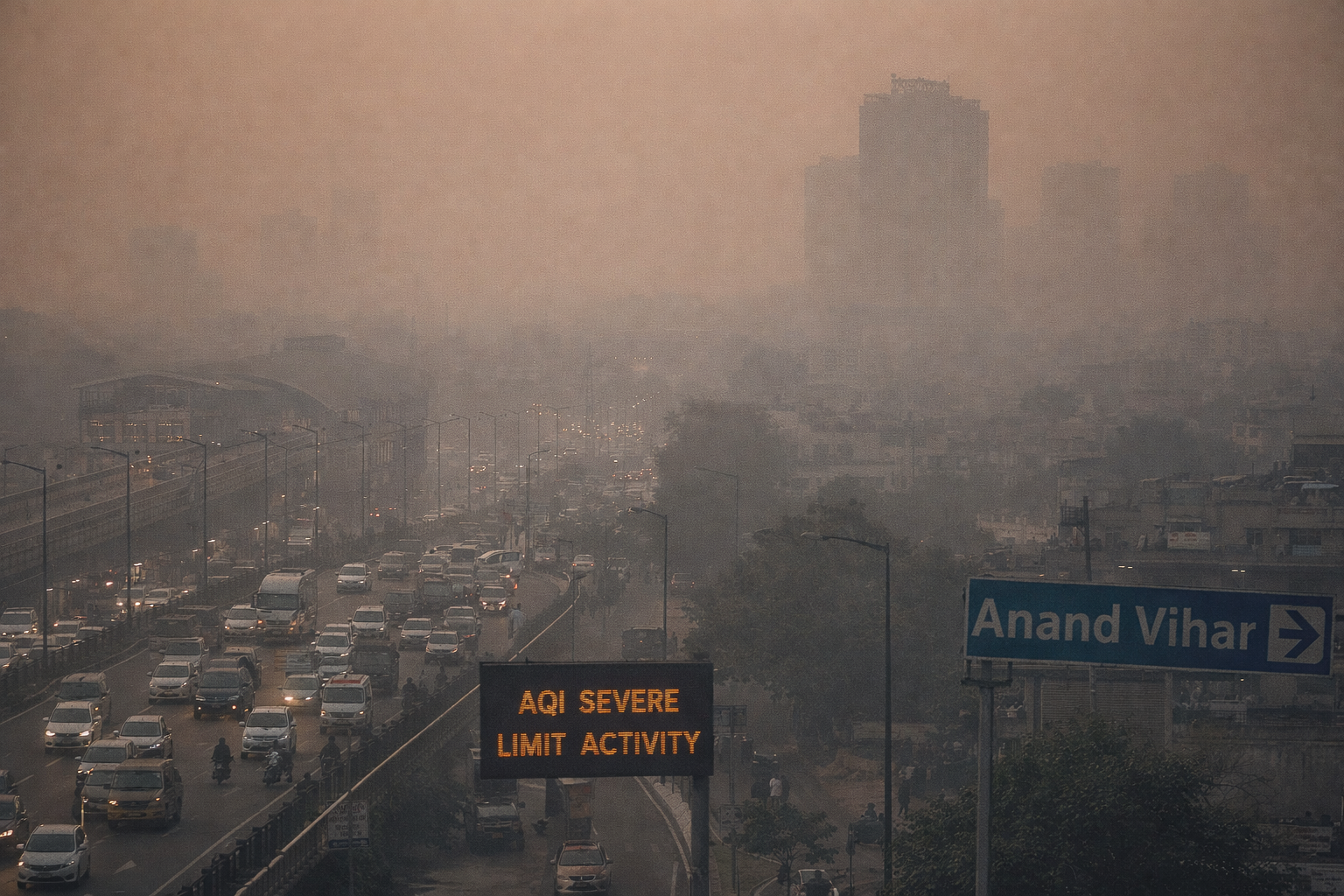

Delhi and the wider National Capital Region continue to grapple with severe air pollution, with dense smog and winter fog combining to keep the Air Quality Index in the very poor to severe category across several locations. Monitoring stations in Anand Vihar, Ghaziabad, and parts of East Delhi have recorded AQI levels crossing the 400 mark, placing air quality firmly in the severe zone.
The conditions have reduced visibility, disrupted daily routines, and prompted advisories related to travel, schooling, and public health.
Air quality across NCR has remained hazardous through most of the day, with pollution peaking during early morning and late evening hours. In hotspots such as Anand Vihar and Ghaziabad, AQI readings have stayed above 400, indicating air that poses serious health risks even to otherwise healthy individuals.
Health experts warn that prolonged exposure during such phases can lead to breathing difficulties, eye irritation, fatigue, and aggravated respiratory and cardiac conditions.
Dense fog combined with high pollution levels has affected flight operations at Indira Gandhi International Airport, leading to delays, cancellations, and diversions. Airlines have advised passengers to check flight status before travelling, particularly during early morning hours when visibility remains poor.
Airport operations continue under low-visibility protocols, with schedules subject to sudden changes.
Road travel across Delhi NCR has also been impacted due to reduced visibility. Traffic police have issued advisories urging cautious driving, with speed restrictions in place on major expressways and arterial roads.
Commuters have reported slower movement during peak hours, especially in fog-prone stretches connecting Delhi with Ghaziabad, Noida, and Gurugram.
In response to the deteriorating air quality, authorities in Delhi, Noida, and Ghaziabad have suspended physical classes for nursery to Class V students, moving them to online mode. Some schools are continuing higher classes through hybrid arrangements, depending on local conditions.
Officials said the measures are aimed at reducing exposure for children during periods of severe pollution.
Doctors have advised residents to limit outdoor exposure, avoid morning walks and strenuous outdoor exercise, and wear protective masks if stepping out is unavoidable. Households have been encouraged to keep windows closed during peak pollution hours and use air purifiers indoors where available.
Medical professionals caution that even short-term exposure during severe AQI phases can have cumulative health effects.
With winter conditions expected to persist, authorities are closely monitoring pollution and weather patterns. Advisories and restrictions may continue or be extended if AQI levels remain in the severe range.
Residents are advised to stay updated through official announcements and plan travel, schooling, and outdoor activities with caution.
Several areas across Delhi-NCR are recording very poor to severe AQI, with locations like Anand Vihar and parts of Ghaziabad crossing 400, which falls in the severe category.
An AQI above 400 indicates severe air pollution, where even healthy individuals may experience health effects, and vulnerable groups face significantly higher risks.
Physical classes for younger students have been suspended in parts of Delhi-NCR, with schools shifting to online or hybrid learning as a precautionary measure.
Yes. Poor visibility caused by smog and fog has led to flight delays, cancellations, and diversions, especially during early morning hours.
Residents should limit outdoor activity, avoid exercise outside, wear masks when necessary, and follow official health and travel advisories.
Part of the NCR Guide editorial team, covering news, real estate, food and lifestyle across Delhi NCR.
Join thousands of Delhi NCR residents who start their day with our morning brief — top stories, real estate updates, events and deals.