
The real estate market in Delhi NCR is constantly evolving, influenced by government policies, infrastructural development, and market demand. In 2025, the focus is on affordable housing, luxury developments, and commercial real estate expansion. This guide explores key trends, investment hotspots, upcoming projects, financing options, and more.
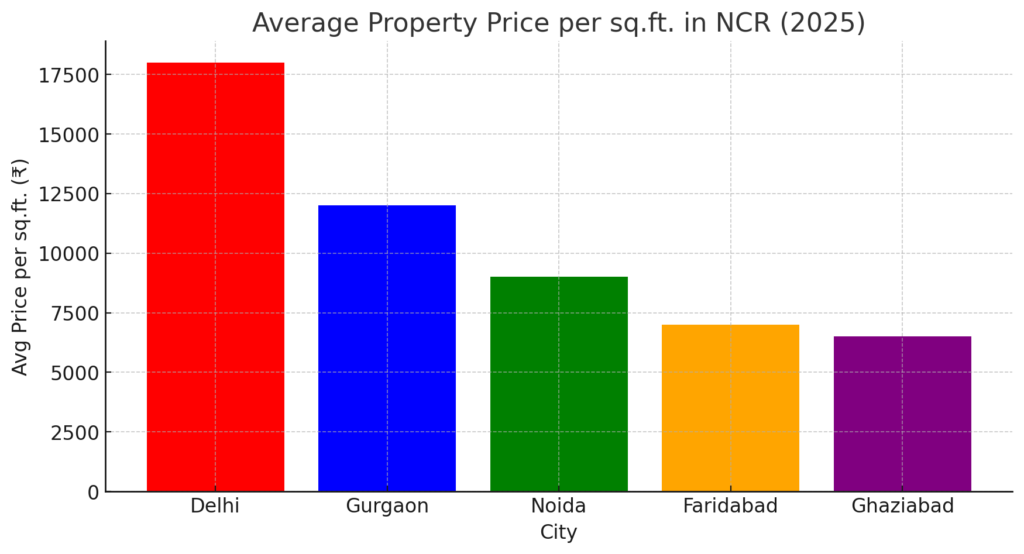
The Delhi NCR real estate market continues to evolve, with each region witnessing unique trends influenced by infrastructure development, demand-supply dynamics, government policies, and economic growth. Here’s a deep dive into the price movements and investment trends across the major cities in Delhi NCR:
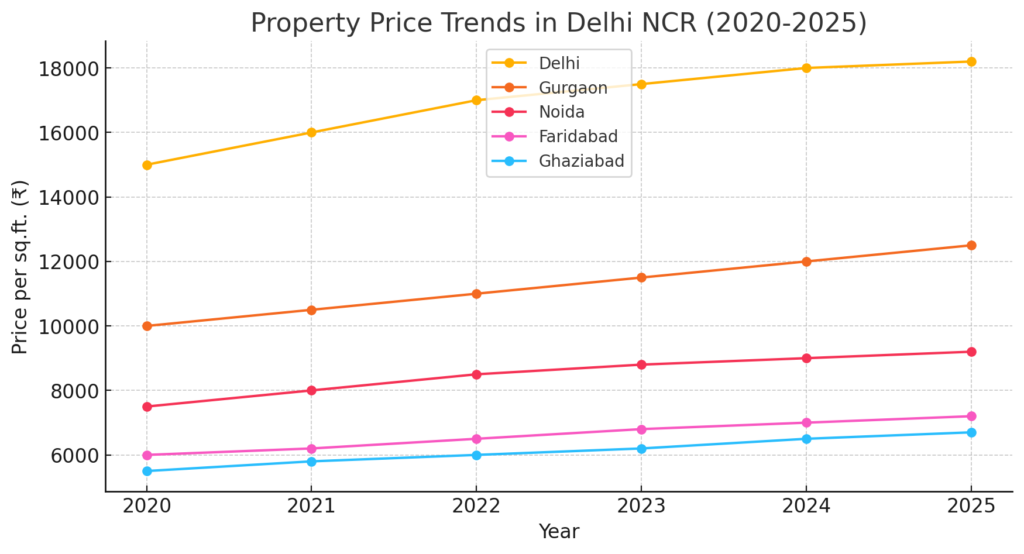
South & Central Delhi will see minor price corrections due to already high saturation.
Periphery areas (Dwarka, Najafgarh, Narela) are set to grow due to large-scale land pooling projects.
Rental demand in commercial areas will remain high, supporting price stability.
Luxury prices will continue rising as demand for gated high-end communities grows.
Affordable housing sectors (Sector 37, 58, and beyond) will see an increase in first-time home buyers.
Commercial real estate in Cyber City and Golf Course Extension will continue appreciating due to increased corporate demand.
Jewar-Yamuna Expressway corridor will see a price boom, especially in commercial plots.
Sectors near metro connectivity will appreciate faster than others.
Luxury apartments in Noida will attract more buyers as developers target premium segments.
Prices will rise moderately, making it a good long-term investment option.
Sectors 75-89 will see high appreciation due to commercial hubs.
Metro & Smart City initiatives will be key factors in driving demand.
Indirapuram & Vaishali will see the highest price appreciation in the next 2-3 years.
Developers are focusing on affordable housing, keeping the market accessible.
RRTS completion will increase demand along the transit corridor.
The real estate market in Delhi NCR experiences diverse demand across various property segments. With rapid urbanization, infrastructure growth, and economic shifts, understanding the demand-supply equation is crucial for buyers and investors.
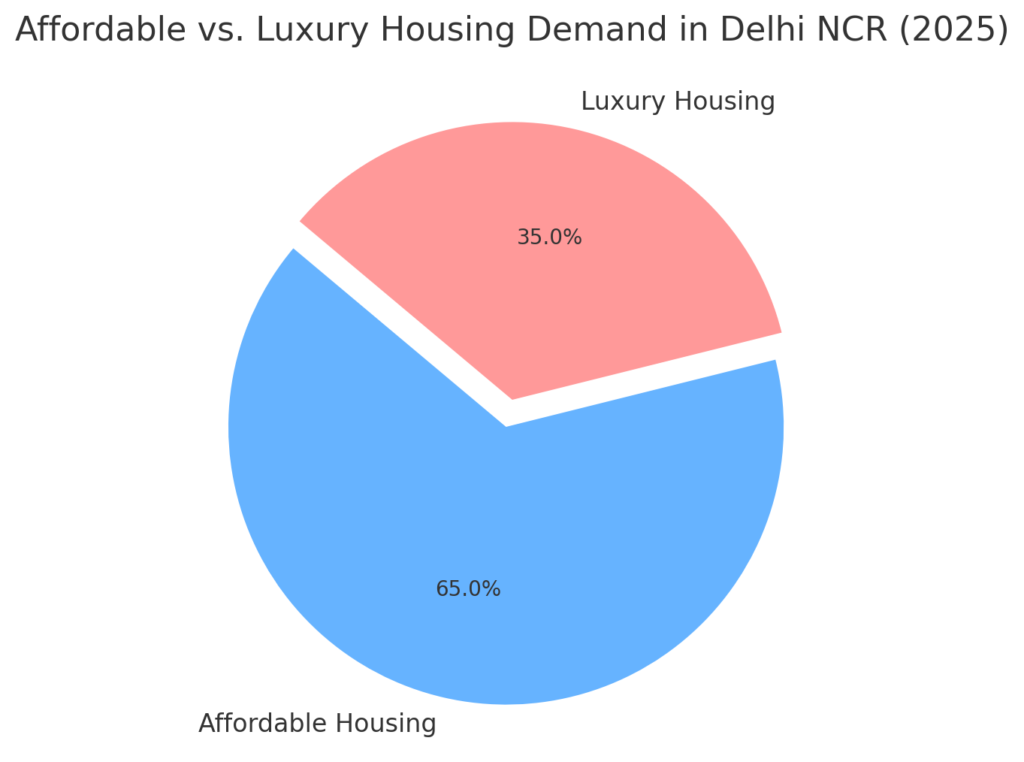
The affordable housing segment (properties priced under ₹50L) has seen significant demand, especially in areas with good connectivity and job hubs. The Pradhan Mantri Awas Yojana (PMAY) has played a crucial role in increasing affordability through subsidies and easy financing options for first-time buyers.
Despite high demand, affordable housing supply remains limited due to rising construction costs and land acquisition issues. Developers are focusing on mid-range and premium projects, leading to a shortage of budget housing units.
The luxury housing market (properties above ₹2CR) has witnessed strong demand from high-net-worth individuals (HNI) and non-resident Indians (NRIs), especially post-pandemic. There is a growing demand for ultra-luxury penthouses, villas, and smart homes featuring premium amenities.
Top Luxury Housing Locations in Delhi NCR
Leading developers like DLF, M3M, Godrej, ATS, and Tata Housing are launching ultra-luxury projects to cater to high-net-worth individuals. Luxury property supply is increasing, but sales are influenced by factors such as location, brand reputation, and potential resale value.

The rise of startups, IT companies, and hybrid work models has drastically increased demand for co-working and managed office spaces. Top developers like WeWork, Awfis, Smartworks, and Cowrks are expanding their footprint across Gurgaon, Noida, and Delhi.

Malls, high-street retail, and mixed-use developments are witnessing strong growth, especially in Gurgaon and Noida. Luxury retail spaces in DLF Emporio (Delhi), Ambience Mall (Gurgaon), and DLF Mall of India (Noida) are attracting international brands.
Developers are launching Grade A office spaces with sustainable and tech-enabled workplaces. The commercial sector remains highly competitive, with new entrants offering flexible lease models and customized workspaces.


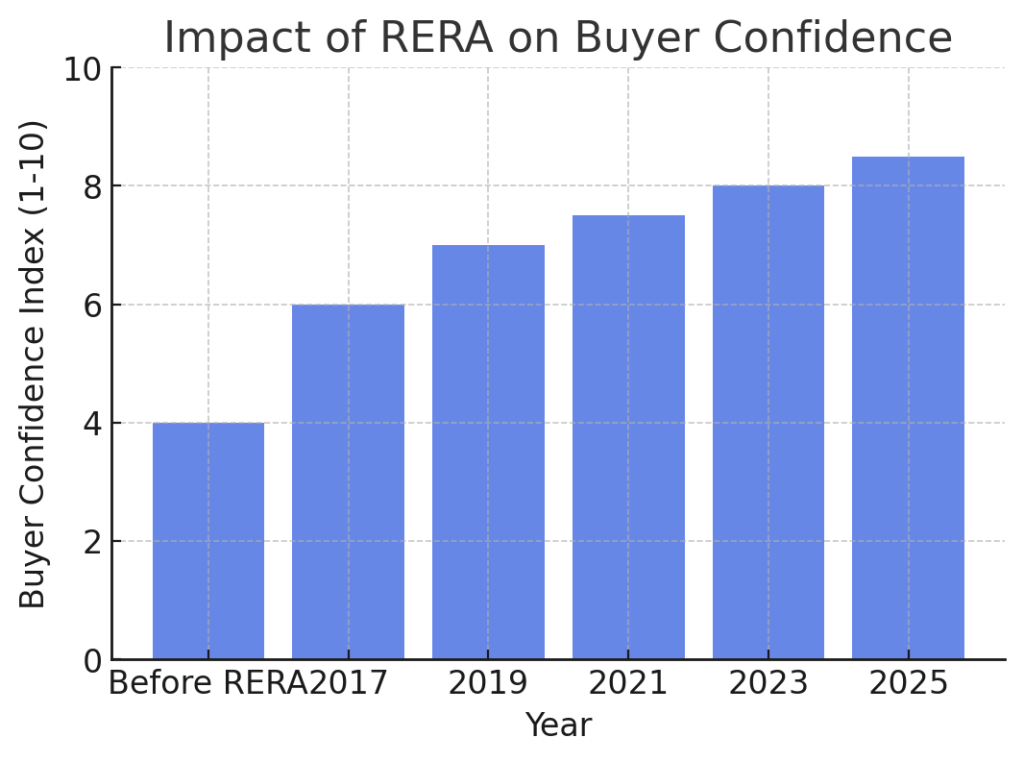
The real estate sector in Delhi NCR is heavily influenced by government policies and regulatory frameworks. Reforms such as RERA, stamp duty reductions, and urban development initiatives like Smart City projects have played a crucial role in shaping market trends. These policies impact property prices, buyer confidence, investment trends, and overall market stability. Below is a deep dive into key government policies affecting the region’s real estate landscape.
The Real Estate (Regulation and Development) Act, 2016 (RERA) was introduced to promote transparency and accountability in the real estate sector. It aims to regulate builders, protect homebuyers from fraud, and ensure timely project completion.
Mandatory Registration – All new and ongoing real estate projects (above a certain size) must be registered with RERA.
Escrow Account for Developers – Builders must deposit 70% of funds received from buyers into an escrow account to prevent fund diversion.
Penalties for Delays – Developers must compensate buyers for project delays.
Standardized Sales Agreements – Reduces unfair terms imposed on homebuyers.
Consumer Dispute Resolution – Establishes RERA authorities and Appellate Tribunals to address buyer complaints.
📍 Gurgaon – DLF The Camellias, M3M Golf Estate, Godrej Habitat
📍 Noida – ATS Knightsbridge, Tata Eureka Park, Mahagun Medalleo
📍 Delhi – Central Delhi Redevelopment Projects, Anant Raj Estates
📍 Faridabad – Puri Aanandvilas, Omaxe World Street
📍 Ghaziabad – Gaurs Siddhartham, ATS Advantage
For a complete list of top RERA-approved projects, check out our detailed guide on Upcoming RERA-Approved Projects in Delhi NCR.
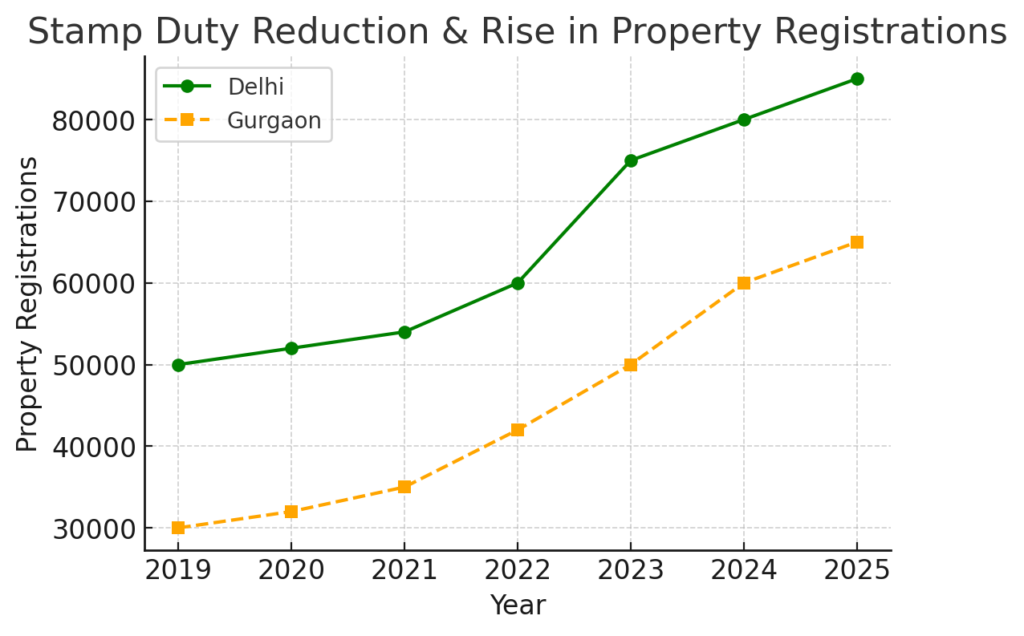
Stamp duty is a crucial cost component in real estate transactions. Changes in stamp duty rates can significantly impact buyer sentiment, affordability, and transaction volumes.
| Region | Previous Rate | Revised Rate (2024-25) | Impact |
|---|---|---|---|
| Delhi | 6% (men), 4% (women) | 5% (men), 3% (women) | Increased property registrations, more women homebuyers |
| Haryana (Gurgaon, Faridabad, etc.) | 7% | 6% | Boosted residential transactions |
| Uttar Pradesh (Noida, Ghaziabad, Greater Noida) | 7% | No recent change | Market remains stable |
Higher Property Transactions – Delhi and Gurgaon saw a 15-20% increase in property registrations post the reduction.
Rise in Women Homebuyers – The lower stamp duty for women has encouraged more female ownership.
Boost in Mid-Segment Housing – Buyers looking at homes under ₹1.5 Cr have benefited the most from lower transaction costs.
Developers Offer Additional Incentives – To leverage the lower stamp duty, some developers provide extra discounts or waive other charges.
Want to calculate stamp duty on your new home? Use our Delhi NCR Stamp Duty Calculator.”
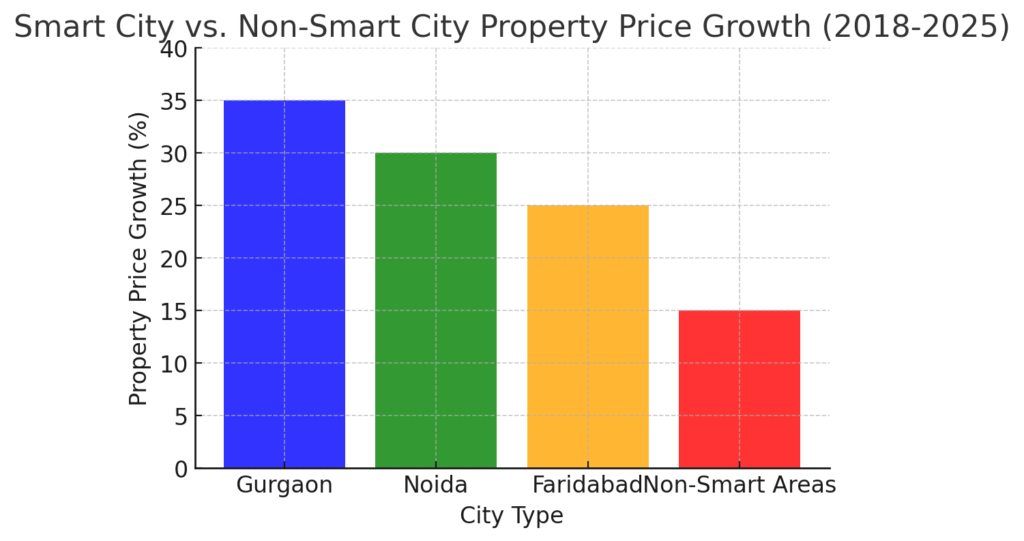
Delhi NCR has been a major beneficiary of India’s Smart City Mission, with cities like Gurgaon, Faridabad, and Noida receiving increased government funding for infrastructure modernization.
📍 Gurgaon:
📍 Noida & Greater Noida:
📍 Faridabad:
Higher Property Valuation: Prices in Smart City zones are rising faster than in non-smart regions.
Better Rental Demand: Improved infrastructure attracts working professionals, boosting rental income potential.
Increased Commercial Growth: Companies prefer office spaces in well-connected smart cities, increasing demand for Grade A commercial properties.
Gurgaon: Dwarka Expressway, Sector 113, New Gurgaon
Noida: Sector 150, Noida Extension, Sector 143
Faridabad: Neharpar (Greater Faridabad), Sector 88, Sector 89
Want to invest in a future-ready city? Explore our guide on Best Smart City Investment Locations in Delhi NCR.”
The Delhi NCR real estate market is shaped not only by property prices and government policies but also by evolving home loan trends. In 2025, factors such as interest rate stabilization, new loan schemes, and strategic financing options are playing a crucial role in home-buying decisions.
For potential buyers, understanding these financing trends is key to securing the best mortgage deals and making informed investments.
Interest rates directly impact home loan affordability, influencing EMI amounts and total repayment costs. In 2025, experts predict that home loan interest rates will stabilize between 7.5% and 8.5%, driven by economic factors like RBI policies, inflation control, and global financial conditions.

| Lender | Floating Rate (%) | Fixed Rate (%) |
|---|---|---|
| SBI Home Loan | 8.25% | 8.50% |
| HDFC Home Loan | 8.20% | 8.45% |
| ICICI Bank | 8.30% | 8.60% |
| PNB Housing Finance | 8.50% | 8.75% |
| LIC Housing Finance | 8.40% | 8.65% |

Pro Tip: Compare loan tenure and EMI options before finalizing a lender.
Use our Home Loan EMI Calculator to estimate monthly payments.

Banks and financial institutions offer a range of home loan schemes tailored to different buyer needs, from first-time buyers to high-income professionals.
Pradhan Mantri Awas Yojana (PMAY) – CLSS
SBI MaxGain Home Loan
HDFC Home Loan for Salaried & Self-Employed
ICICI Bank Step-Up Home Loan
Bank of Baroda Home Loan Advantage
Pro Tip: Consider loan prepayment options to reduce long-term interest payments.
Confused about which loan suits you? Read our Best Home Loan Schemes in India for 2025 guide.
Compare Interest Rates & Loan Offers
Choose the Right Loan Tenure
Verify the Lender’s Credibility
Maintain a Good Credit Score (750+ for Best Rates)
Factor in Additional Costs

Pro Tip: Negotiate with banks for better loan terms, especially if you have a high credit score.
Planning your dream home? Read our Expert Tips on Getting the Best Home Loan Deal.
For a deeper understanding, check out related articles:
✅ Delhi NCR’s real estate market is diverse, with opportunities across luxury, affordable, and commercial segments.
✅ Upcoming infrastructure projects like Jewar Airport will reshape investment hotspots.
✅ Government policies and home loan trends play a major role in property demand.
✅ Choosing the right location based on investment goals is crucial for high returns.
Q1: Is 2025 a good year to invest in real estate in Delhi NCR?
Yes, 2025 is expected to be a strong year for real estate investment in Delhi NCR due to infrastructure growth, rising property demand, and favorable home loan interest rates. Areas with metro expansions and Smart City initiatives are likely to see the highest appreciation.
Q2: How will home loan interest rates affect property buyers in 2025?
Home loan interest rates are projected to stabilize between 7.5% and 8.5%. This creates a favorable borrowing environment, allowing homebuyers to lock in lower rates and reduce long-term costs. Comparing fixed and floating rate options is essential for better financial planning.
Q3: What are the best home loan schemes available in 2025?
Some of the best home loan schemes include Pradhan Mantri Awas Yojana (PMAY) for first-time buyers, SBI MaxGain for flexible repayment, and ICICI Step-Up Home Loan for young professionals. Each scheme has different benefits, making it important to choose based on your financial profile.
Q4: What is the impact of RERA on homebuyers in Delhi NCR?
RERA has significantly increased transparency and accountability in the real estate sector, ensuring that projects are completed on time and buyers receive what was promised. This has boosted buyer confidence and led to more secure real estate transactions.
Q5: Which areas in Delhi NCR are expected to see the highest property price appreciation?
Locations such as Dwarka Expressway, Noida Extension, and sectors along the upcoming metro corridors in Gurgaon and Faridabad are projected to experience high property price appreciation due to improved infrastructure and growing demand.
Q6: How does stamp duty reduction affect real estate investment?
Lower stamp duty reduces the overall cost of property transactions, making it more affordable for homebuyers and increasing property registrations. This benefits both investors and first-time buyers looking to enter the market.
Q7: What is the difference between Smart City and non-Smart City property growth?
Smart Cities generally experience higher property price appreciation due to better infrastructure, digital integration, and enhanced urban planning. Buyers prefer Smart City locations for improved quality of life and long-term investment security.
Q8: What are the key factors to consider when applying for a home loan in 2025?
Important factors include your credit score (750+ for better interest rates), EMI affordability, loan tenure, lender credibility, and additional charges like processing fees and prepayment penalties. Comparing multiple lenders can help secure the best deal.
Q9: How can buyers maximize their return on investment in Delhi NCR real estate?
To maximize ROI, buyers should invest in under-construction projects for lower prices, choose locations with upcoming infrastructure developments, and consider rental yield potential. Commercial properties and high-demand residential areas also offer strong investment opportunities.
Q10: What are the risks of buying property in Delhi NCR, and how can they be avoided?
Common risks include project delays, legal disputes, and hidden costs. To avoid these, buyers should check RERA registrations, verify builder credibility, review all legal documents, and work with reputed financial institutions for home loan approvals.
The Delhi NCR real estate market in 2025 offers exciting opportunities for investors, homebuyers, and businesses. With the right research, location choices, and financial planning, you can make informed investment decisions and maximize returns.
For more insights, latest property news, and expert recommendations, stay tuned to NCR Guide!
Part of the NCR Guide editorial team, covering news, real estate, food and lifestyle across Delhi NCR.
Join thousands of Delhi NCR residents who start their day with our morning brief — top stories, real estate updates, events and deals.