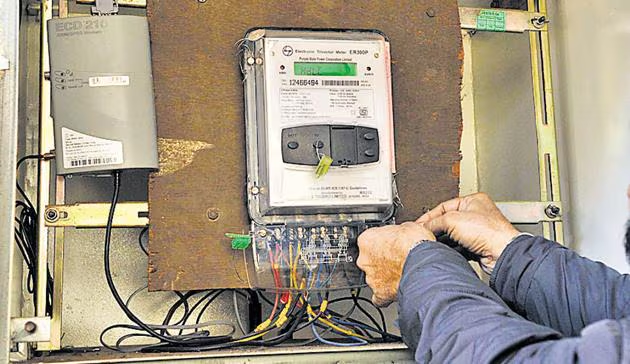

More than 93% of domestic electricity consumers in Delhi received benefits under the city’s power subsidy scheme in December, according to official data released by the government. The figures indicate that a large majority of households either paid zero electricity bills or significantly reduced amounts, reinforcing the scale of the subsidy’s reach across the capital.
The data has been presented as evidence that the subsidy scheme continues to cover most residential consumers, particularly during winter months when electricity consumption remains moderate.
The reported 93% includes all domestic consumers who received any level of subsidy, not just households with zero bills. This means the number covers:
• Households whose monthly consumption stayed within fully subsidised limits
• Consumers who crossed the free-unit threshold but still received partial subsidy
• Lower and middle-income households with controlled winter usage
Only a small percentage of consumers, primarily those with higher electricity consumption, paid the full tariff without subsidy.
Delhi’s electricity subsidy is structured around consumption slabs, with benefits tapering as usage increases. While exact unit limits vary by policy notifications, the framework generally works as follows:
• Low-consumption households receive full subsidy, resulting in zero bills
• Moderate-consumption households receive partial subsidy, reducing the payable amount
• High-consumption households pay full tariff without subsidy
This structure is designed to encourage energy conservation while ensuring affordability for the majority of residents.
December typically records lower electricity consumption compared to summer months, when air conditioners and cooling appliances push usage beyond subsidy thresholds.
As a result:
• More households remain within subsidised slabs
• Fewer consumers lose benefits due to high usage
• Overall subsidy coverage increases
This seasonal pattern explains why subsidy reach is often higher in winter compared to peak summer periods.
The small percentage of households outside the subsidy net generally includes:
• Large homes with high electricity usage
• Households using multiple air conditioners or heavy appliances
• Consumers who cross higher consumption slabs consistently
For these users, electricity bills reflect full tariff rates, regardless of season.
While the headline figure highlights coverage, it does not detail:
• How many households received zero bills versus partial subsidy
• The average savings per household
• The total cost to the exchequer for December
• Month-on-month trends across the year
Policy experts note that such details are essential to evaluate long-term sustainability, not just coverage.
For families staying within subsidy limits, the scheme continues to provide significant monthly relief, especially as food, rent, and transport costs rise.
Parents, pensioners, and single-income households are among those who benefit most during winter months, when savings from electricity bills can be redirected to other essential expenses.
While supporters argue that the subsidy eases cost-of-living pressures, critics raise questions about:
• Fiscal sustainability
• Opportunity cost of public funds
• Whether benefits should be more targeted
The December data adds fuel to this debate by demonstrating wide coverage, but not necessarily efficiency or long-term viability.
Consumers looking to retain subsidy benefits should:
• Monitor monthly electricity consumption
• Avoid crossing higher usage slabs unnecessarily
• Be aware that benefits reduce or disappear once thresholds are crossed
The scheme rewards predictable and moderate usage, especially outside summer months.
There has been no announcement of changes to the subsidy structure based on the December data. Officials have indicated that coverage figures are being monitored as part of broader energy and welfare planning.
With summer months approaching later in the year, consumption patterns will likely test the subsidy’s reach again.
It means that over 93% of domestic electricity consumers in Delhi received some level of subsidy in December, either through zero electricity bills or reduced payable amounts.
No. The figure includes households that received full subsidy as well as partial subsidy. Only those whose consumption stayed within the fully subsidised slab paid zero bills.
Households with higher electricity consumption, typically due to larger homes or heavy appliance usage, cross subsidy limits and therefore pay full tariff rates.
Electricity consumption is generally lower in winter as cooling appliances are not in use. This allows more households to stay within subsidised consumption slabs, increasing overall coverage.
Yes. Eligible domestic consumers receive the subsidy automatically based on their monthly electricity usage. No separate application is required
Part of the NCR Guide editorial team, covering news, real estate, food and lifestyle across Delhi NCR.
Join thousands of Delhi NCR residents who start their day with our morning brief — top stories, real estate updates, events and deals.