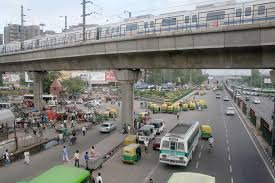

For years, residents and daily commuters in East Delhi have endured potholes, overflowing sewage, and hazardous traffic conditions on Ghazipur Road—a stretch infamous for being nearly unmotorable. But that narrative is finally beginning to shift.
Located adjacent to the massive Ghazipur landfill, this road has long battled serious infrastructural neglect. The root of the problem? Leachate, a toxic fluid that seeps from mountains of untreated waste, regularly spilled onto the road, especially during monsoons. This not only corroded the road’s surface but posed a direct threat to the safety of pedestrians, cyclists, and drivers.
Add to that outdated drainage, choked stormwater outlets, and poor maintenance, and the road had become symbolic of urban neglect.
“There were days we couldn’t even walk past the area without covering our noses. During rains, it was nearly impossible to cross without wading through knee-deep muck,” shared Rakesh Meena, a local shopkeeper in Ghazipur Mandi.
Responding to mounting public complaints and local media coverage, the Public Works Department (PWD) has launched a full-scale revamp of the Ghazipur stretch. The restoration project, already underway, includes:
According to PWD engineers, the new road layers are designed with improved binding and gradient to withstand heavy rains and prevent future erosion.
Though work is ongoing, commuters have already started noticing visible improvements. Some stretches of the road are now smoother, and early feedback suggests a noticeable reduction in traffic slowdowns.
“For the first time in years, I could drive to work from Anand Vihar without zigzagging around craters. This repair is long overdue,” said Manisha Sharma, a regular commuter.
Residents living near Ghazipur Mandi, Trilokpuri, and Mayur Vihar Phase 3—all affected by the route’s condition—express cautious optimism.
Beyond transport, this upgrade has critical environmental and public health value. By controlling landfill leachate runoff and improving drainage, the intervention reduces risks of soil contamination, vector-borne diseases, and noxious odour release.
The revamped road also supports improved access for ambulances, school buses, and essential goods carriers, many of whom had rerouted through longer paths for years.
PWD officials say the full upgrade will take a few more weeks to complete. The project is being executed in phases to keep traffic disruptions minimal. Once completed, it could serve as a model for other landfill-adjacent zones across Delhi that face similar issues.
As Delhi prepares to tackle broader urban challenges—from air quality to waste management—the Ghazipur Road upgrade stands as a small but significant win in the ongoing battle for livability and infrastructure resilience.
The main issue was leachate spillage from the nearby Ghazipur landfill. Over time, it eroded the road surface, while poor drainage and outdated infrastructure worsened the damage.
The Public Works Department (PWD) of Delhi is leading the road revamp, which includes resurfacing and drainage system upgrades.
Yes, several commuters report smoother rides and fewer delays, especially around Ghazipur Mandi and Mayur Vihar Phase 3.
While no official timeline has been shared, PWD officials estimate several more weeks for full completion, with phased execution to reduce traffic impact.
Absolutely. Containing toxic landfill leachate improves soil and water safety, while better drainage prevents breeding grounds for mosquitoes and other health hazards.
Access may be restricted temporarily during certain phases, but the PWD is coordinating with traffic police to ensure minimal disruption.
Part of the NCR Guide editorial team, covering news, real estate, food and lifestyle across Delhi NCR.
Join thousands of Delhi NCR residents who start their day with our morning brief — top stories, real estate updates, events and deals.