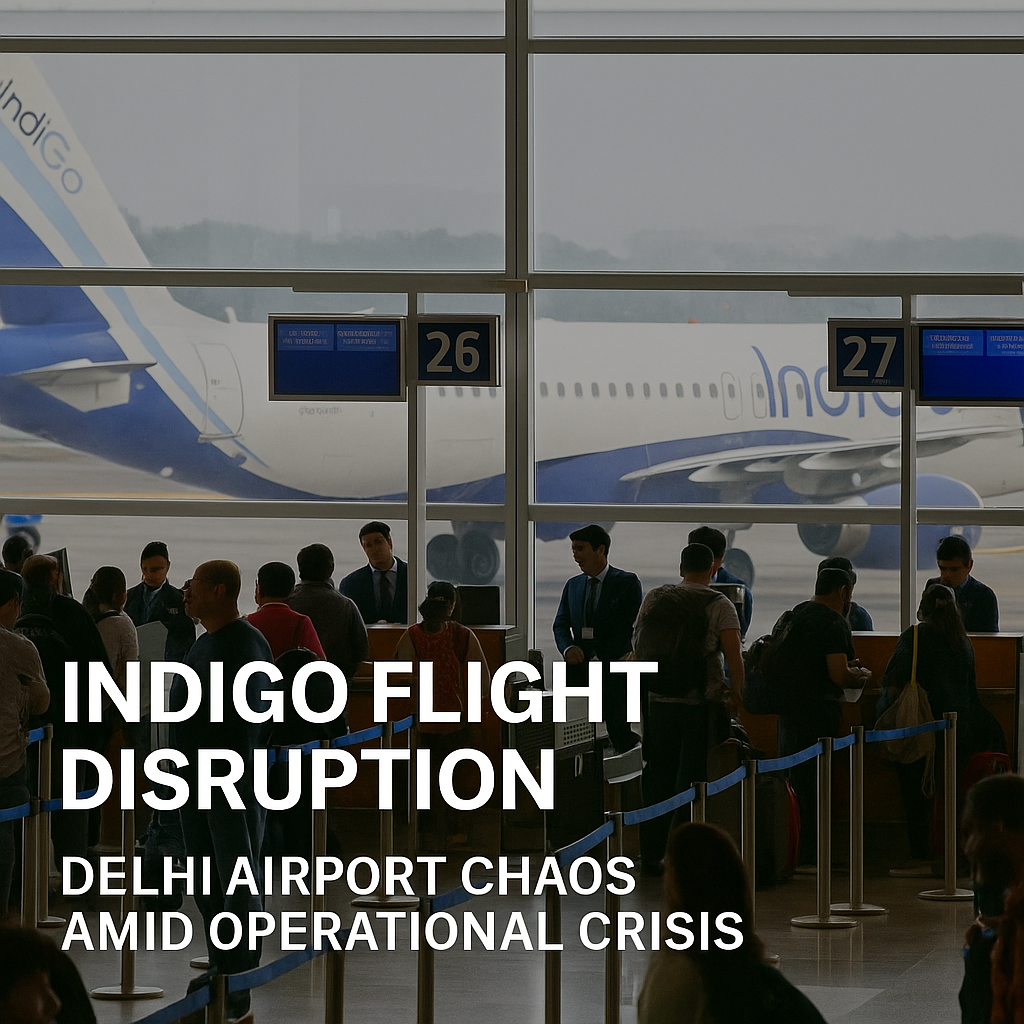

India’s largest airline, IndiGo, entered one of its worst operational breakdowns of the year as Delhi Airport cancelled all IndiGo domestic departures until midnight on December 5. The decision followed several days of escalating delays, missed connections and rolling cancellations that now stretch across the country.
What started as isolated disruptions quickly widened into a nationwide collapse of IndiGo’s network capacity, affecting thousands of travellers and prompting an urgent response from regulators, airports and competing carriers.
Delhi Airport issued the halt after hours of congestion, long queues and widespread confusion at boarding counters. The terminal struggled to manage the volume of disrupted passengers, and authorities saw no feasible way to prevent further crowding unless all remaining departures were paused.
The trigger for this crisis is rooted in the new Flight Duty Time Limitation rules, which require longer rest hours and tighter rostering for pilots and crew. These rules came into force on November 1, giving airlines several months to recalibrate operations.
According to industry officials, IndiGo did not realign its crew schedules effectively, leading to unexpected shortages. Once early morning flights were cancelled due to crew unavailability, the entire day’s network began to unravel. The backlog then pushed Delhi Airport to make the extraordinary decision to halt departures entirely.
Key point: The cancellations were the result of crew rostering failures amplified by new regulatory requirements, not a technical or safety issue.
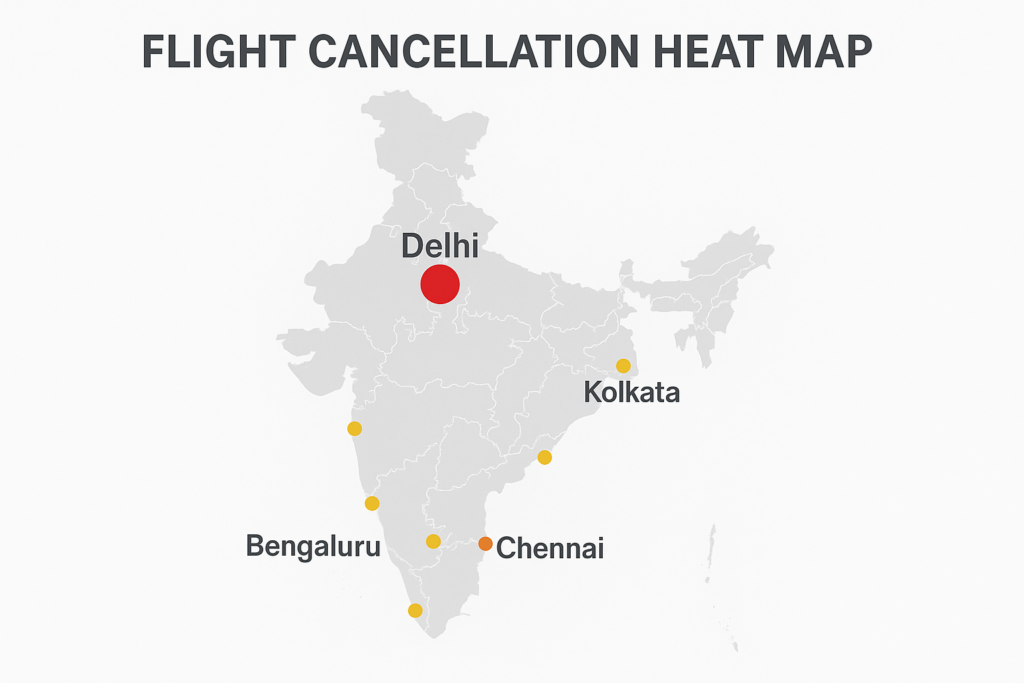
The impact has been severe:
High-intent query covered:
Travellers searching “which IndiGo flights are cancelled today” or “IndiGo cancellations Delhi” will find direct answers and context here.
The new FDTL norms were introduced to protect passenger and crew safety by reducing fatigue. These norms require:
IndiGo, which operates India’s most extensive domestic schedule, appears to have underestimated the impact of these rule changes on crew availability. Several senior crew members were reportedly not rostered correctly under the new templates, leading to last-minute no-shows and transit disruptions.
Key point: Crew fatigue rules triggered the crisis, but inefficient planning turned it into a network-wide breakdown.
While other airlines also had to adjust to the new norms, none saw disruptions at the scale IndiGo did.
This is because:
However, the crisis created ripple effects across the market. Air India, Vistara and Akasa saw unprecedented spikes in last-minute bookings and sharp jumps in economy fare prices, sometimes crossing 30,000 rupees for common routes.
High-intent user questions often include “what to do if IndiGo cancels my flight”, so this section is written for clarity and helpfulness.
Passengers should:
Key point: Passengers with connecting international flights through Delhi should contact both carriers immediately, as missed connections are not always automatically re-validated.
IndiGo has been facing operational strain for weeks:
In isolation, each of these issues would have been manageable. Combined, they exposed how thinly stretched IndiGo’s operational margins have been.
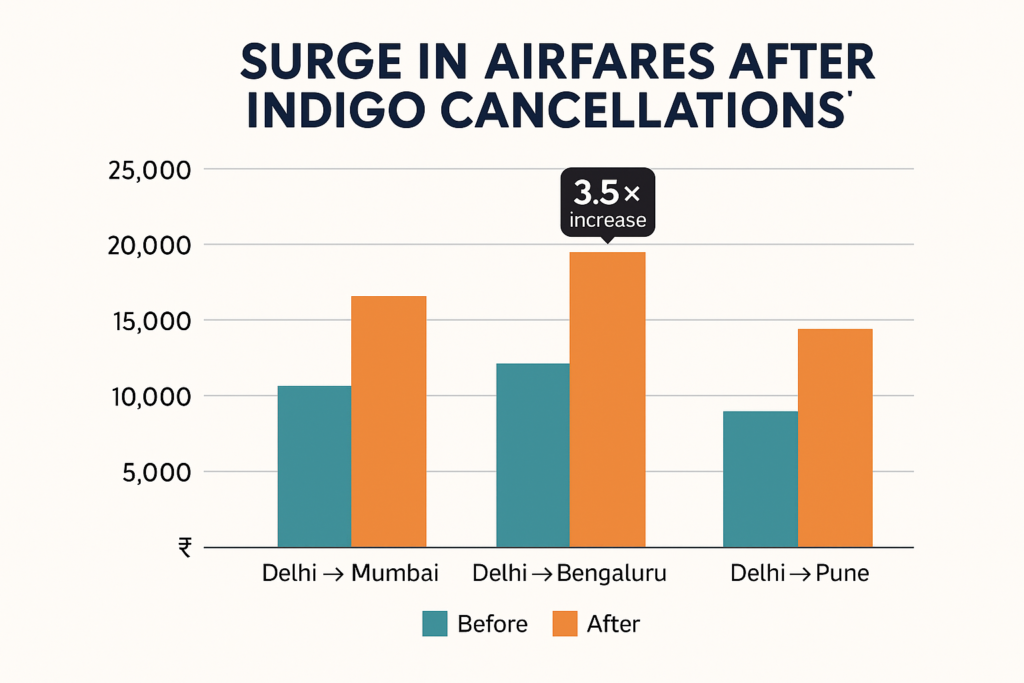
With IndiGo pulling large capacity off the grid:
High-intent query:
“Why are flights so expensive today?”
Answer: Reduced capacity, high demand and limited seats across all airlines.
Since you prefer a lighter focus on stocks, here is a concise but authoritative summary.
InterGlobe Aviation shares slipped more than 3 percent, reaching near a five-month low. The market is concerned about:
Analysts are watching how quickly IndiGo stabilises operations before drawing long-term conclusions.
This is one of the most frequently searched questions.
A realistic assessment:
Key point: Travellers should monitor updates closely through airport websites and IndiGo’s app rather than relying on intermittent notifications.
The crisis underscores that rapid aviation growth without equally strong operational planning creates vulnerability. It also reveals:
The industry is entering its busiest winter travel season. How IndiGo recovers will influence not only passenger sentiment but also policy conversations about operational resilience.
The grounding of all IndiGo departures from Delhi is not simply a one-day inconvenience. It is a stress test for India’s aviation ecosystem. The next few days will determine how well IndiGo can regain control of its schedules and how quickly passengers regain confidence.
India’s skies are crowded, demand is rising and expectations of punctuality are higher than ever. For now, passengers want transparency, reliability and clear communication. Whether IndiGo can offer that again will shape the months ahead.
Delhi Airport halted all IndiGo departures because the airline was unable to staff flights after widespread crew shortages linked to new duty-time rules. The cancellations were intended to reduce congestion and prevent further disruption inside the terminals.
No. While Delhi was the worst hit, major cities such as Bengaluru, Chennai, Kolkata and Hyderabad also saw cancellations. The disruption spans IndiGo’s national network, not just one airport.
It depends on how quickly the airline can rebuild its crew rosters under the new Flight Duty Time Limitation rules. If scheduling stabilises, operations may improve within two to three days. If deeper compliance issues are found, delays may persist longer.
Check the IndiGo website or app for the latest status, apply for a refund or free rebooking, and avoid reaching the airport unless the airline confirms your updated departure. Passengers with urgent travel plans should explore trains, buses or alternate airlines immediately.
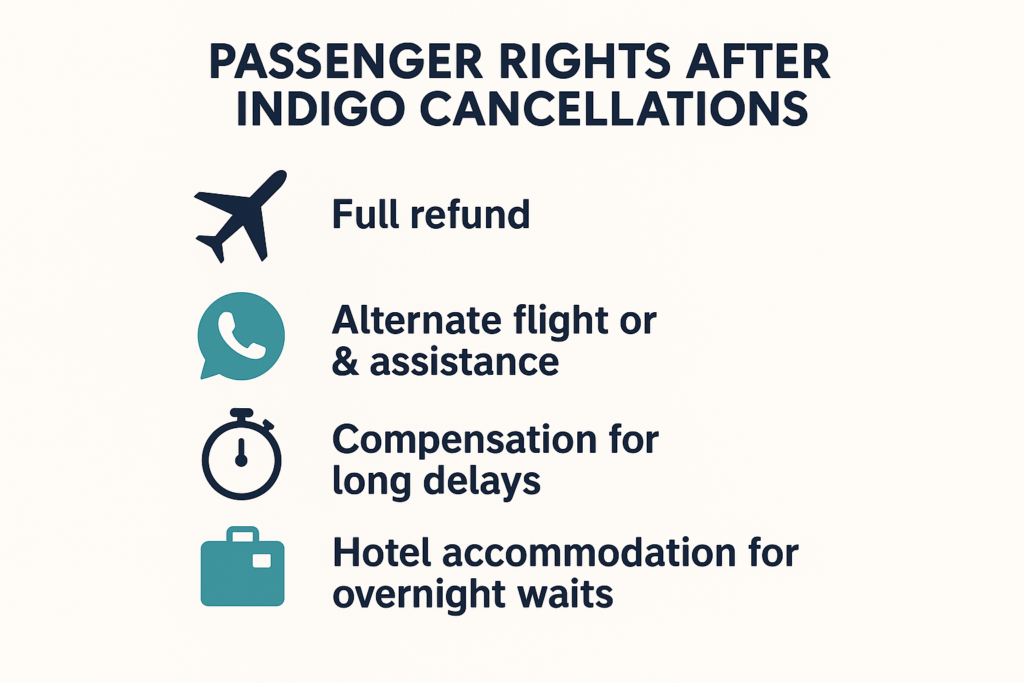
Yes. IndiGo is processing refunds for same-day cancellations through its app and website. Refund timelines may vary depending on the payment method, but passengers are entitled to a full refund when a flight is cancelled by the airline.
Compensation eligibility depends on the timing of the cancellation notice. If IndiGo informed passengers less than two weeks before departure and does not offer a suitable alternative, compensation rules may apply. DGCA guidelines outline the exact criteria.
The revised Flight Duty Time Limitation rules require longer rest hours and stricter scheduling for pilots and crew. IndiGo’s large and interconnected network left little room for error. When the new rules came into effect, gaps in crew planning caused widespread shortages.
Yes. With IndiGo reducing capacity, demand shifted to other airlines. This resulted in a sharp spike in fares on high-traffic routes such as Delhi to Mumbai and Delhi to Bengaluru. Travellers reported paying several times the usual price.
Not automatically. Passengers on separate tickets must contact both airlines. IndiGo does not always revalidate connecting bookings unless part of a single itinerary. It is important to reach out early if you have onward travel.
IndiGo remains operational, but travellers should monitor updates closely. Booking flexible fares or leaving buffer time for important trips is advisable until the airline stabilises its schedules.
Part of the NCR Guide editorial team, covering news, real estate, food and lifestyle across Delhi NCR.
Join thousands of Delhi NCR residents who start their day with our morning brief — top stories, real estate updates, events and deals.