
In Lucknow, mangoes are more than fruit — they’re tradition, trade, and pride. This July, the city becomes the epicenter of India’s mango culture with the return of the Uttar Pradesh Mango Festival 2025, hosted from July 4 to 6 at Awadh Shilpgram. With over 600 mango varieties, culinary shows, farmer showcases, and business networking opportunities, the Aam Mahotsav isn’t just a seasonal celebration — it’s a convergence of flavors, livelihoods, and stories.
Organized by the Uttar Pradesh Horticulture Department, this annual festival aims to spotlight the state’s deep-rooted role in mango production. UP contributes nearly a third of India’s mango output, and events like this help preserve heirloom cultivars, open new markets for small farmers, and offer the public a deeper appreciation of India’s fruit biodiversity.
A senior official summed it up perfectly:
“The Aam Mahotsav isn’t just about eating mangoes — it’s about celebrating those who grow them, protect them, and pass down their legacy.”
The festival will be held at Awadh Shilpgram, a cultural venue along Amar Shaheed Path. It runs for three days — from July 4 to July 6, between 10 AM and 8 PM daily. Entry is free, and the location is well-connected via metro and road. Visitors can expect accessible parking and child-friendly amenities throughout the venue.
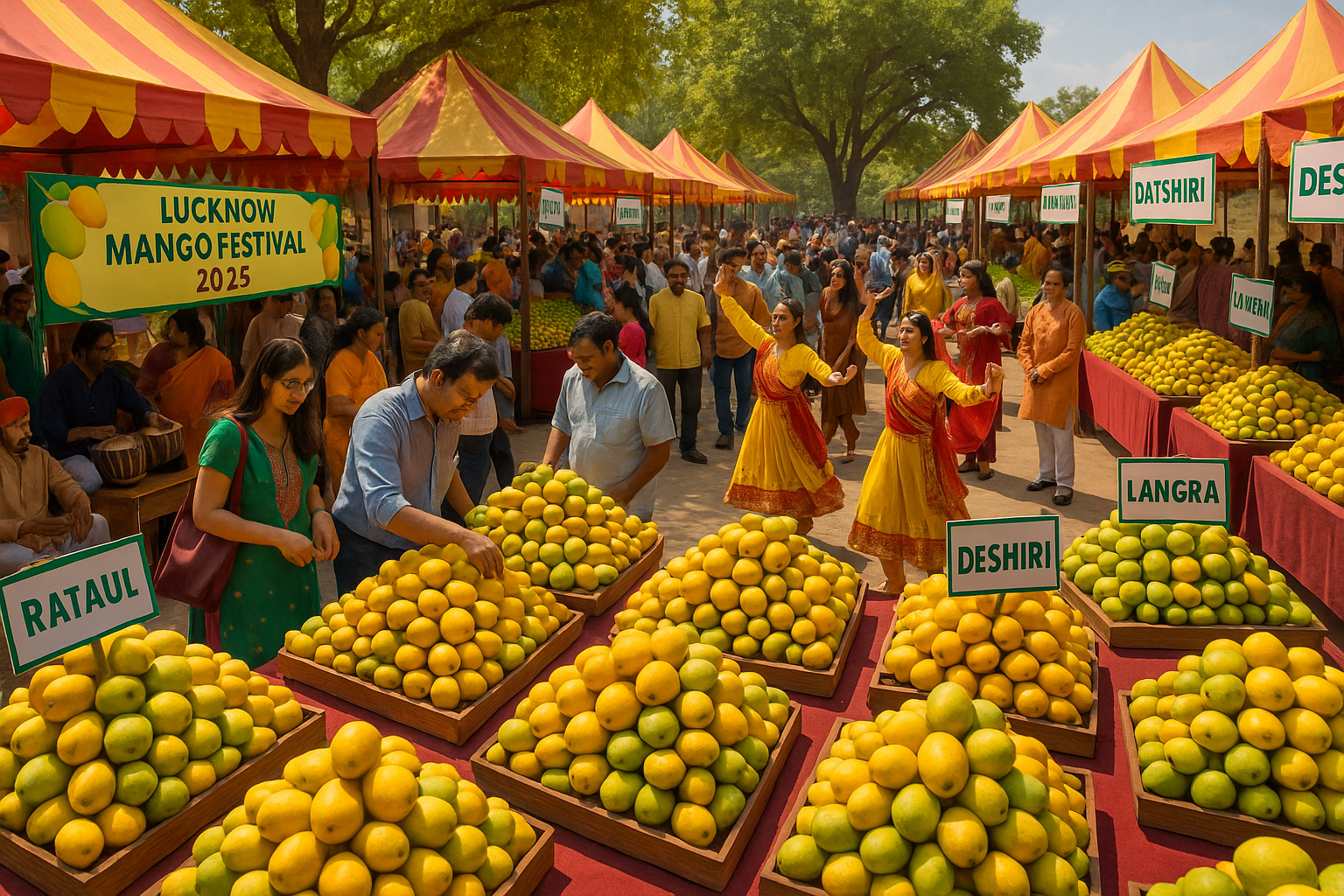
Stepping into the festival feels like walking through a living encyclopedia of mangoes. More than 600 varieties will be on display — not just from Uttar Pradesh, but from states like Gujarat, Bihar, Maharashtra, and Madhya Pradesh. Each mango type is accompanied by detailed information about its origin, taste profile, and farming techniques. From the classic Malihabadi Dussehri to rare hybrid cultivars, the range reflects India’s unmatched fruit diversity.
But this isn’t just a static display. Across three days, visitors can watch chefs craft mango-based dishes, attend talks by horticulture experts, and even participate in tasting contests. Children’s activities, storytelling corners, and folk music performances add an immersive cultural layer. And for professionals, buyer-seller networking meets help bridge the gap between rural cultivators and national or global buyers.
Among the crowd favorites are Langra, known for its smooth, fibrous-free texture, and Rataul, often referred to as the perfume mango due to its intense aroma. There’s also Gulabkhas, a delicate, floral variety, and Amrapali, a popular hybrid that blends flavor with a longer shelf life. Stall owners, many of them farmers themselves, are happy to explain each mango’s traits — from pulpiness to disease resistance — offering a hands-on, personal learning experience for enthusiasts.
For many cultivators, this event is also a business opportunity. With dedicated zones for B2B meetings, retailers and exporters can explore new sourcing relationships. Workshops cover topics such as grafting techniques, organic farming, post-harvest handling, and value-added processing — all crucial for modernizing India’s mango economy.
While Delhi’s 34th Aam Mahotsav, held earlier in June, showcased about 400 mango varieties, Lucknow’s festival takes it further — both in quantity and in regional participation. Here, the focus extends beyond consumer experience to farmer empowerment and agri-policy awareness. The Lucknow edition is as much about innovation and sustainability as it is about celebration.
👉 Delhi Mango Festival details here
This festival welcomes a diverse audience. Food lovers come to explore new flavors. Families enjoy a safe, educational outing with plenty of hands-on activities for children. Gardeners and agriculture students gain knowledge they can apply. And for tourists, it’s a chance to see how Lucknow’s cultural identity and seasonal produce come together in one vibrant, joyful space.
A visitor from last year reflected:
“The mangoes were amazing, but what stayed with me was the care and pride in each farmer’s story. It’s something I’ll bring my kids back to every year.”
Plan to arrive in the morning to beat the crowds and catch the first cooking demos. Most stalls accept UPI payments, and fresh mango boxes often sell out by mid-afternoon. Water stations, shaded areas, and seating zones make the venue comfortable for longer stays. Entry is free, and guided tours are available at select times for those who want deeper insights.
At its core, the Lucknow Aam Mahotsav is about more than just a fruit. It’s about resilience in farming, heritage preservation, and the relationships between soil, climate, and community. In a year where erratic weather patterns are disrupting agriculture across the country, this festival stands as a reminder of how traditional knowledge and new tools can work hand in hand.
If you’re in or near Lucknow this July, the mango festival isn’t just a great outing — it’s a window into everything that makes India’s agrarian spirit so unique and enduring.
The Lucknow Mango Festival, also known as Aam Mahotsav, is a three-day celebration of mango varieties, farmers, and food culture, held from July 4 to 6, 2025 at Awadh Shilpgram. It showcases over 600 mango types and includes live events, workshops, and business networking.
More than 600 mango varieties will be displayed, including rare cultivars like Rataul, Gulabkhas, and heritage varieties from across India.
The festival will take place at Awadh Shilpgram, located on Amar Shaheed Path, Lucknow. It is well-connected by metro and road, and offers visitor facilities including parking and food courts.
No, entry is completely free for all visitors.
Visitors can enjoy live mango cooking demonstrations, cultural performances, mango tasting sessions, workshops on farming and processing, and explore direct purchase opportunities from farmers.
While both festivals celebrate India’s mango heritage, the Lucknow edition features more varieties (600+), stronger farmer participation, and a broader emphasis on trade and innovation. It is also more rooted in UP’s agrarian identity.
Yes, many growers sell mangoes on-site. Visitors can purchase fresh mango boxes, jams, pickles, and value-added mango products directly from farmers.
Absolutely. The event attracts tourists, mango enthusiasts, and professionals from across India. Lucknow’s connectivity via rail, air, and road makes it easy for outstation visitors to attend.
Part of the NCR Guide editorial team, covering news, real estate, food and lifestyle across Delhi NCR.
Join thousands of Delhi NCR residents who start their day with our morning brief — top stories, real estate updates, events and deals.