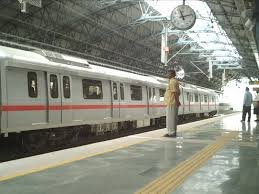


In a landmark step toward transforming urban mobility in North India, the Namo Bharat Rapid Rail project — India’s first regional rapid transit system — is set to extend its high-speed corridor from Meerut to Alwar, connecting three key states: Delhi, Haryana, and Rajasthan.
This ambitious expansion underlines India’s push toward integrated regional connectivity, sustainable mobility, and world-class commuter experience across the National Capital Region (NCR).
The Namo Bharat Rapid Rail, officially known as the Regional Rapid Transit System (RRTS), is a semi-high-speed rail network being built by the National Capital Region Transport Corporation (NCRTC).
Designed for speeds up to 160 km/h, the system aims to provide fast, frequent, and comfortable regional travel, reducing travel time and road congestion across NCR’s densely populated corridors.
The first operational route — the Delhi–Meerut corridor — already showcases India’s entry into a new era of mass transit with modern stations, advanced signalling systems, and energy-efficient coaches.
The Namo Bharat corridor’s extension from Meerut to Alwar will create a seamless north–south transit spine across the NCR, covering roughly 164 km and connecting Delhi with major industrial and urban hubs in Haryana and Rajasthan.
In a recent update, the Haryana government approved the extension of the Namo Bharat corridor from Dharuhera to Bawal, a significant industrial town near the Rajasthan border.
This decision reverses an earlier proposal to end the corridor at Dharuhera and aligns the project with the PM Gati Shakti Master Plan, ensuring integrated connectivity to industrial and logistics zones like:
Officials said the corridor will enhance regional logistics efficiency, attract manufacturing investments, and create employment opportunities in South Haryana’s fast-growing industrial belt.
The extended Namo Bharat line isn’t just about faster travel — it’s about economic growth, decongestion, and sustainable mobility.
By linking business districts and industrial zones, the project will strengthen supply chains and promote industrial expansion across Gurugram, Rewari, and Alwar.
Once completed, the RRTS will enable travel from Delhi to Alwar in under two hours, compared to four to five hours by road.
The trains, powered by energy-efficient electric propulsion, will reduce vehicular emissions, traffic congestion, and dependence on fossil fuels — key to improving NCR’s air quality.
Stations will feature airport-style facilities, smart ticketing, Wi-Fi-enabled concourses, security surveillance, and seamless integration with Delhi Metro, buses, and feeder networks.
Each Namo Bharat station is being built as a multi-modal hub, blending aesthetics, accessibility, and technology.
The tracks and signalling systems are being built to international safety standards, with automatic train control (ATC) and real-time monitoring via a central command centre in Delhi.
When operational, the Meerut–Alwar corridor will link multiple economic clusters across three states:
| Region | Key Locations | Economic Significance |
|---|---|---|
| Delhi | Sarai Kale Khan, INA | Core NCR transit and administrative hub |
| Haryana | Gurugram, Manesar, Rewari, Bawal | Industrial, logistics, and IT powerhouse |
| Rajasthan | Neemrana, Alwar | Emerging manufacturing and tourism belt |
This integration will make daily intercity commuting faster, cleaner, and more affordable, setting a benchmark for India’s future regional transit systems.
The Namo Bharat Rapid Rail is part of India’s broader mission under PM Gati Shakti and National Infrastructure Pipeline (NIP) to create multi-modal, connected transport ecosystems.
Alongside economic benefits, it signals India’s shift toward sustainable, high-speed, and commuter-first urban design — bridging the gap between metros and towns, while creating new growth corridors.
Once fully operational, commuters on the Delhi–Alwar line can expect:
The Delhi–Gurugram–SNB (Shahjahanpur–Neemrana–Behror) section is already under construction, with trial runs expected in late 2026.
The complete Delhi–Alwar corridor is slated for phased operational rollout by 2028–2029.
Officials say the Namo Bharat network will serve as a template for future rapid transit corridors connecting major city clusters like Delhi–Panipat and Delhi–Palwal.
The Namo Bharat Rapid Rail, also known as the Regional Rapid Transit System (RRTS), is India’s first semi-high-speed regional rail network developed by the National Capital Region Transport Corporation (NCRTC). It connects Delhi with surrounding cities to make regional travel faster, safer, and more sustainable.
The new Meerut–Alwar extension will connect Delhi, Haryana, and Rajasthan through a 164-km corridor with 22 stations. Major stops include Sarai Kale Khan, Gurugram, Manesar, Rewari, Bawal, and Alwar, linking industrial and residential hubs across NCR.
The trains are designed for speeds of up to 160 km/h, with an average operating speed of about 105 km/h, making intercity commutes significantly faster than current road or metro travel options.
The Haryana government approved extending the corridor from Dharuhera to Bawal to improve access to key industrial and logistics hubs like IMT Manesar, MBIR, and the Multi-Modal Logistics Hub (IMLH) Bawal. The move aligns with the PM Gati Shakti Master Plan for integrated infrastructure growth.
The project will reduce travel time between Delhi and Alwar to under two hours, ease congestion on highways, and improve air quality. For industries, it strengthens supply chains, enhances logistics efficiency, and supports job creation across South Haryana and Rajasthan’s manufacturing zones.
Commuters can expect air-conditioned coaches, reserved seating for women and seniors, digital ticketing, Wi-Fi-enabled stations, and seamless integration with Delhi Metro and local buses for last-mile connectivity.
Construction on the Delhi–Gurugram–SNB section is already in progress. Trial runs are expected by late 2026, with full corridor operations targeted for 2028–2029 in phased rollouts.
The corridor uses electric propulsion systems, solar-powered stations, and energy-efficient operations, significantly cutting emissions compared to car and bus travel. It’s a key part of India’s shift toward green mobility and urban sustainability.
The Namo Bharat Rapid Rail is part of India’s PM Gati Shakti and National Infrastructure Pipeline (NIP) — national missions focused on creating multi-modal transport systems that connect economic, industrial, and residential centers seamlessly across states.
Cities including Delhi, Ghaziabad, Gurugram, Manesar, Rewari, Bawal, Neemrana, and Alwar will benefit directly, improving access for commuters, workers, and industries along the NCR’s busiest corridor.
Part of the NCR Guide editorial team, covering news, real estate, food and lifestyle across Delhi NCR.
Join thousands of Delhi NCR residents who start their day with our morning brief — top stories, real estate updates, events and deals.