
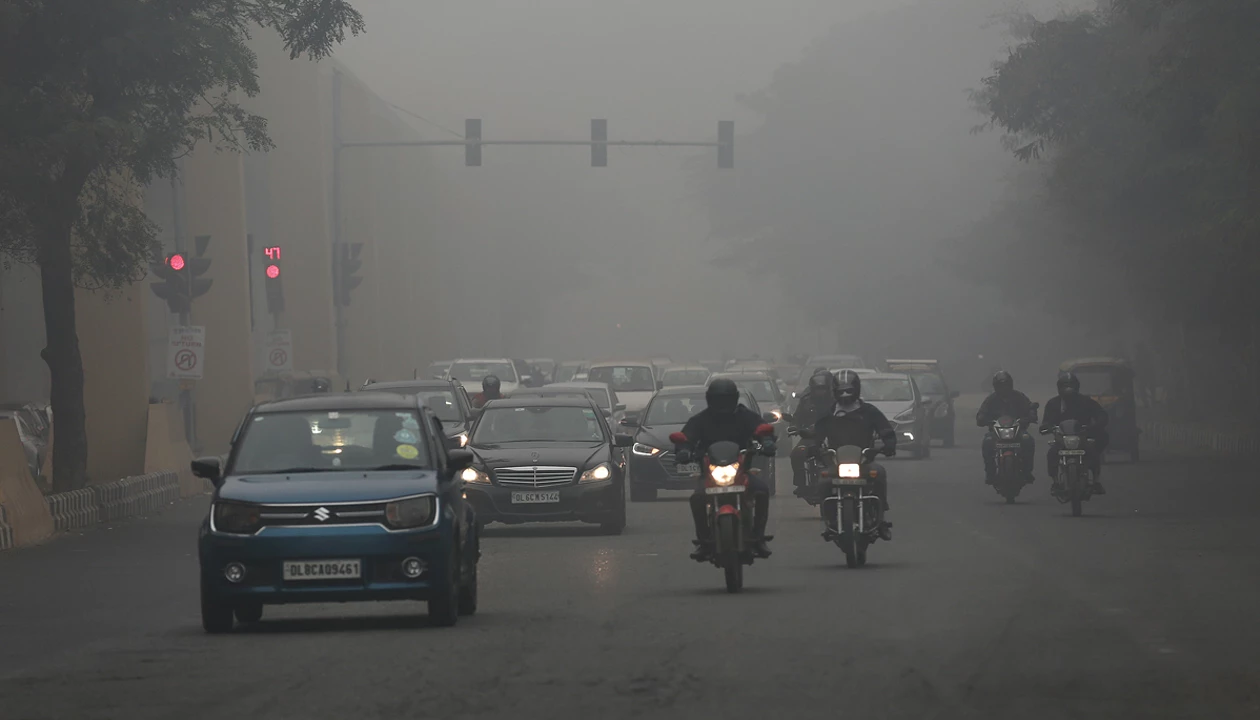

Delhi has entered a new phase of pollution control where GRAP-IV level measures are no longer being treated as temporary emergency steps. Instead, the city has begun enforcing several of these restrictions as ongoing operational rules, especially during periods when air quality remains persistently poor or severe.
The most visible shift affects private vehicle owners. Fuel stations are now authorised to deny fuel to vehicles without a valid Pollution Under Control certificate, and non-BS6 vehicles face refuelling restrictions during high-pollution phases. Officials have signalled that these steps reflect the reality that Delhi’s air quality crisis is no longer episodic, but structural.
For years, Delhi’s pollution response relied on short activation windows, where restrictions were imposed for a few days and lifted once AQI showed marginal improvement. Authorities now acknowledge that this approach has failed to deliver sustained results.
Air quality data shows that very poor and severe AQI levels now recur frequently, especially during winter months when low wind speed and temperature inversion trap pollutants close to the ground. Officials have indicated that brief restrictions followed by relaxation encourage non-compliance and undermine enforcement credibility.
By keeping GRAP-IV measures in force for longer periods, the administration aims to create predictable, continuous pressure on pollution sources rather than reactive crackdowns.
Fuel stations across Delhi are now part of the pollution enforcement chain. Under the revised approach, petrol pumps can verify PUC compliance before dispensing fuel, making emission checks unavoidable for daily commuters.
Verification may be conducted through:
• Physical inspection of the PUC certificate
• Digital verification where systems are integrated
• Manual checks supported by enforcement agencies
If the PUC certificate is expired, missing, or invalid, fuel can be refused on the spot. This marks a shift from symbolic penalties to functional restrictions that directly affect mobility.
If a vehicle does not meet PUC requirements:
• Fuel may be denied immediately
• The owner may be directed to the nearest authorised PUC centre
• Repeated violations may attract challans during roadside or pump-level inspections
For commuters who refuel frequently, even a short lapse in certificate validity can result in significant disruption, especially during extended pollution episodes.
The enforcement focus on non-BS6 vehicles reflects their disproportionate contribution to urban emissions. Vehicles manufactured before BS6 norms emit significantly higher levels of particulate matter and nitrogen oxides, particularly diesel models.
Authorities have stated that allowing older vehicles unrestricted access during severe pollution periods undermines the effectiveness of other control measures. As a result, refuelling restrictions are being used as a practical way to limit their operation without imposing blanket bans.
BS6 compliance refers to vehicles that meet Bharat Stage VI emission standards. These standards mandate:
• Lower sulphur content in fuel
• Advanced exhaust treatment systems
• Reduced tailpipe emissions
Vehicle owners can verify BS6 status through registration documents or manufacturer specifications. Those driving non-compliant vehicles are being advised to plan mobility alternatives during pollution peaks.
Authorities have clarified that exemptions are strictly limited to ensure the rules remain effective. Emergency services such as ambulances, fire engines, and law enforcement vehicles are exempt to maintain public safety.
Public transport and essential government fleets may continue operating under monitored conditions, but these too are subject to emission oversight. Private vehicle owners should not assume exemptions unless explicitly notified.
While fuel denial is the most visible tool, enforcement is being supported by:
• Traffic police checks
• Transport department inspections
• Automated camera systems
• Cross-verification through vehicle databases
Officials have indicated that enforcement is designed to be persistent rather than punitive, encouraging compliance through inconvenience rather than isolated fines.
The cumulative effect of fuel denial, emission checks, and BS-based restrictions is expected to alter commuting behaviour across the city. Owners of older vehicles may reduce usage, switch to public transport, or rely more on ride-sharing services during prolonged pollution periods.
Transport planners expect increased pressure on public transit systems, particularly buses and metro services, as private vehicle usage declines during severe AQI phases.
Alongside immediate enforcement, the government has approved Delhi’s first dedicated e-waste recycling park, signalling an attempt to address pollution sources beyond vehicular emissions.
Delhi generates substantial electronic waste, much of which is currently processed through informal networks that rely on unsafe dismantling and open burning. These practices contribute to toxic air and soil contamination, particularly in peripheral zones.
A regulated e-waste park aims to centralise processing, reduce illegal burning, and bring waste handling under environmental oversight. While its impact on AQI will not be immediate, officials describe it as structural pollution control, complementing enforcement-based measures.
The current enforcement framework suggests a broader policy direction where pollution compliance becomes routine, not conditional. Authorities appear increasingly willing to impose sustained restrictions on individual behaviour in the interest of public health.
Vehicle ownership, fuel access, and emissions are likely to remain central to Delhi’s pollution strategy, with future measures building on compliance-driven enforcement rather than short-term bans.
For residents, the shift means adjusting to a city where mobility is tied directly to environmental compliance. While the changes introduce inconvenience, officials argue that they reflect the scale and persistence of Delhi’s air quality challenge.
The focus has moved from temporary relief to long-term behavioural change, signalling that pollution control is becoming an everyday governance issue rather than a seasonal emergency.
It means petrol pumps are authorised to deny fuel to vehicles that do not have a valid Pollution Under Control certificate. If the PUC is expired, missing, or invalid, the vehicle may not be allowed to refuel during high-pollution phases.
While framed under GRAP-IV provisions, authorities have indicated that these measures will remain in force as long as air quality stays poor or severe, making them effectively continuous rather than short-term emergency actions.
Vehicles that do not meet BS6 emission standards, including older petrol and diesel models, are subject to stricter restrictions during pollution spikes. Diesel vehicles manufactured before BS6 norms are typically the most impacted.
BS4 vehicles are not permanently banned, but their operation is heavily restricted during periods of severe air pollution, including the possibility of fuel denial.
Yes, but exemptions are limited. Emergency services such as ambulances, fire engines, and police vehicles are exempt. Public transport and essential government fleets may operate under monitored conditions.
An expired PUC can result in immediate denial of fuel and may also lead to penalties during enforcement checks. Vehicle owners are advised to renew PUC certificates without delay.
Yes. Under the current enforcement framework, petrol pumps are legally permitted to refuse fuel if emission compliance requirements are not met.
BS6 compliance is mentioned in your vehicle registration certificate or manufacturer details. Owners can also confirm compliance through authorised service centres or official transport portals.
Penalties may include denial of fuel, challans issued by traffic or transport authorities, and stricter action for repeat violations. Enforcement is designed to encourage compliance rather than rely solely on fines.
Authorities have not set a fixed timeline. Controls are expected to remain in place as long as Delhi continues to record very poor or severe AQI levels, particularly during winter months.
Commuters should ensure their PUC certificate is valid, confirm BS6 compliance, plan alternative transport during high-pollution days, and stay updated on official advisories.
Part of the NCR Guide editorial team, covering news, real estate, food and lifestyle across Delhi NCR.
Join thousands of Delhi NCR residents who start their day with our morning brief — top stories, real estate updates, events and deals.