

The Reserve Bank of India (RBI) has a history of adjusting the repo rate in response to economic conditions, particularly during downturns. The repo rate, which is the rate at which the RBI lends money to commercial banks, serves as a primary tool for controlling inflation and stimulating economic growth. Understanding historical trends and their impacts can provide insights into the effectiveness of such monetary policies.
The RBI has implemented repo rate cuts to mitigate economic slowdowns on several occasions:
These reductions were aimed at boosting liquidity in the market, supporting businesses, and facilitating economic recovery.
Over the past five years, the repo rate has experienced several adjustments:
Historically, repo rate cuts have had mixed effects:
However, the effectiveness of rate cuts depends on factors such as the transmission of rate changes to end consumers, prevailing economic conditions, and global economic trends.
To provide a clearer picture, here are some charts illustrating the repo rate changes, GDP growth rates, and inflation trends over the past years:
(Data Source: FreeFincat)
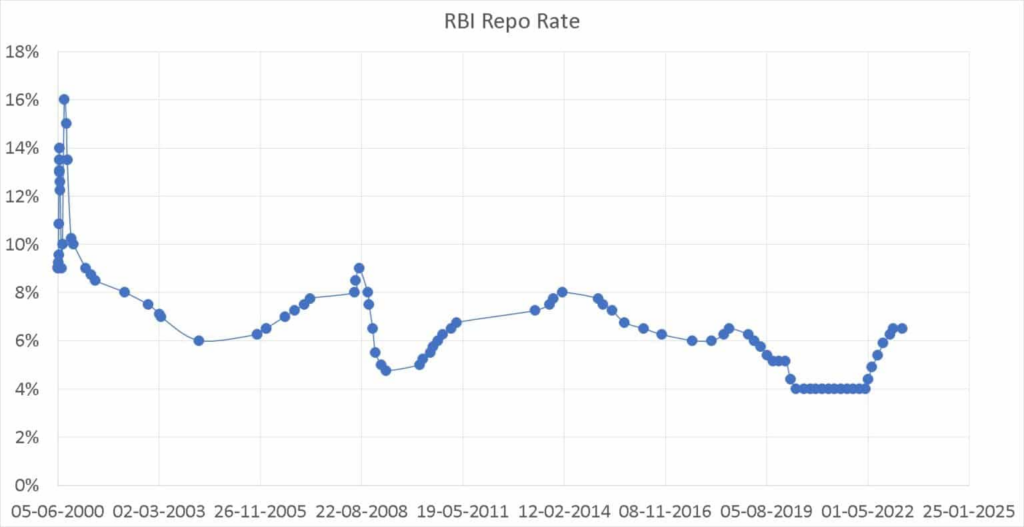
(Data Source: World Bank)
(Data Source: World Bank)
The RBI’s repo rate adjustments play a crucial role in shaping India’s economic landscape. While rate cuts stimulate growth, they also carry risks such as inflation. Understanding historical trends helps policymakers and investors make informed decisions. With the latest rate cut in 2025, its impact on economic recovery and inflation will be closely watched in the coming months.
Part of the NCR Guide editorial team, covering news, real estate, food and lifestyle across Delhi NCR.
Join thousands of Delhi NCR residents who start their day with our morning brief — top stories, real estate updates, events and deals.