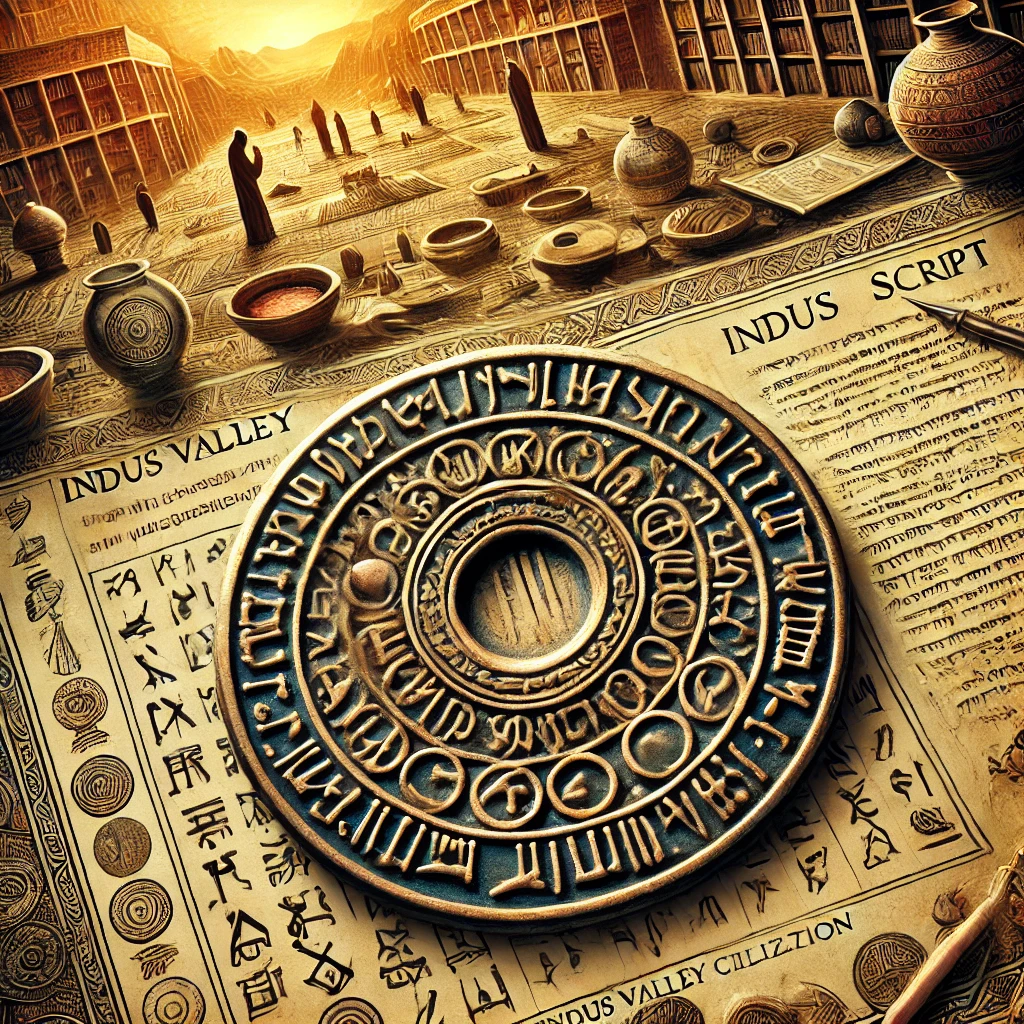

The Indus Valley Civilization – one of the world’s oldest and most sophisticated societies – remains shrouded in mystery, largely due to its undeciphered script. Though scholars have been working on cracking this code for over a century, the puzzle persists, sparking heated debates, controversy, and now, a $1 million prize.
In February 2025, the Chief Minister of Tamil Nadu offered a staggering $1 million to anyone who can successfully decode the ancient script of the Indus Valley Civilization. This prize has renewed hope and excitement among researchers and enthusiasts alike, as they believe cracking the code could offer a glimpse into a civilization that flourished thousands of years ago, stretching across modern-day Pakistan and northern India.
Decoding the script could unlock insights into one of the most advanced Bronze Age civilizations that rivaled ancient Egypt and Mesopotamia. The script, found on seals and pottery, could provide critical answers about the Indus people—their beliefs, customs, and day-to-day lives.
As Rajesh P. N. Rao, a University of Washington computer science professor who has been researching the script for over a decade, puts it:
“A really important question about the pre-history of South Asia could potentially be settled if we are able to completely decipher the script.”
If successful, the findings could not only change how we view ancient India but also settle politically sensitive debates about the origins of modern-day India.
The Indus script is not like most ancient scripts. For starters:
Some researchers, like Nisha Yadav, have dedicated decades to cracking the script. But as she admits, “Not a single sign is deciphered yet.”
Solving the Indus script is more than just an academic exercise. There are political and cultural implications at stake, especially regarding India’s ancient history.
Some scholars argue the script is linked to Indo-European languages such as Sanskrit, while others believe it might belong to the Dravidian language family, spoken today in southern India. Depending on the outcome, one group might claim the civilization as part of their ancestral heritage.
This has led to tensions, with some researchers even receiving death threats due to their theories.
Despite the challenges, researchers are not giving up. Modern technology, like pattern recognition and machine learning, has given new hope. For example, computer models are being used to identify recurring patterns in the script, helping researchers understand how the symbols fit together. This innovative approach might be the key to cracking the code.
As Yadav puts it, “If we decipher the script, it will open a window into the lives and ideology of Indus people. We will get to know a lot of things about our ancestors, what they were thinking, what were they focused on.”
The road to solving the mystery of the Indus Valley script is still long and filled with challenges. There are many hurdles left to overcome, including the need for international cooperation and the discovery of more artifacts. But the ongoing research gives hope that, one day, this ancient script will be unlocked, offering invaluable insights into the world’s most enigmatic civilizations.
As Rao adds, “It will take international multi-disciplinary teamwork, massive funding, and even political negotiations to allow excavations in border areas disputed by India and Pakistan.”
While the $1 million prize offers hope for a breakthrough, the real prize might be the insight into a civilization that, for now, remains locked in symbols and mystery. The day the Indus Valley script is cracked, we will gain a deeper understanding of India’s ancient past and the incredible achievements of its people.
Credit: This story is based on the original article by CNN, published on February 28, 2025.
Part of the NCR Guide editorial team, covering news, real estate, food and lifestyle across Delhi NCR.
Join thousands of Delhi NCR residents who start their day with our morning brief — top stories, real estate updates, events and deals.