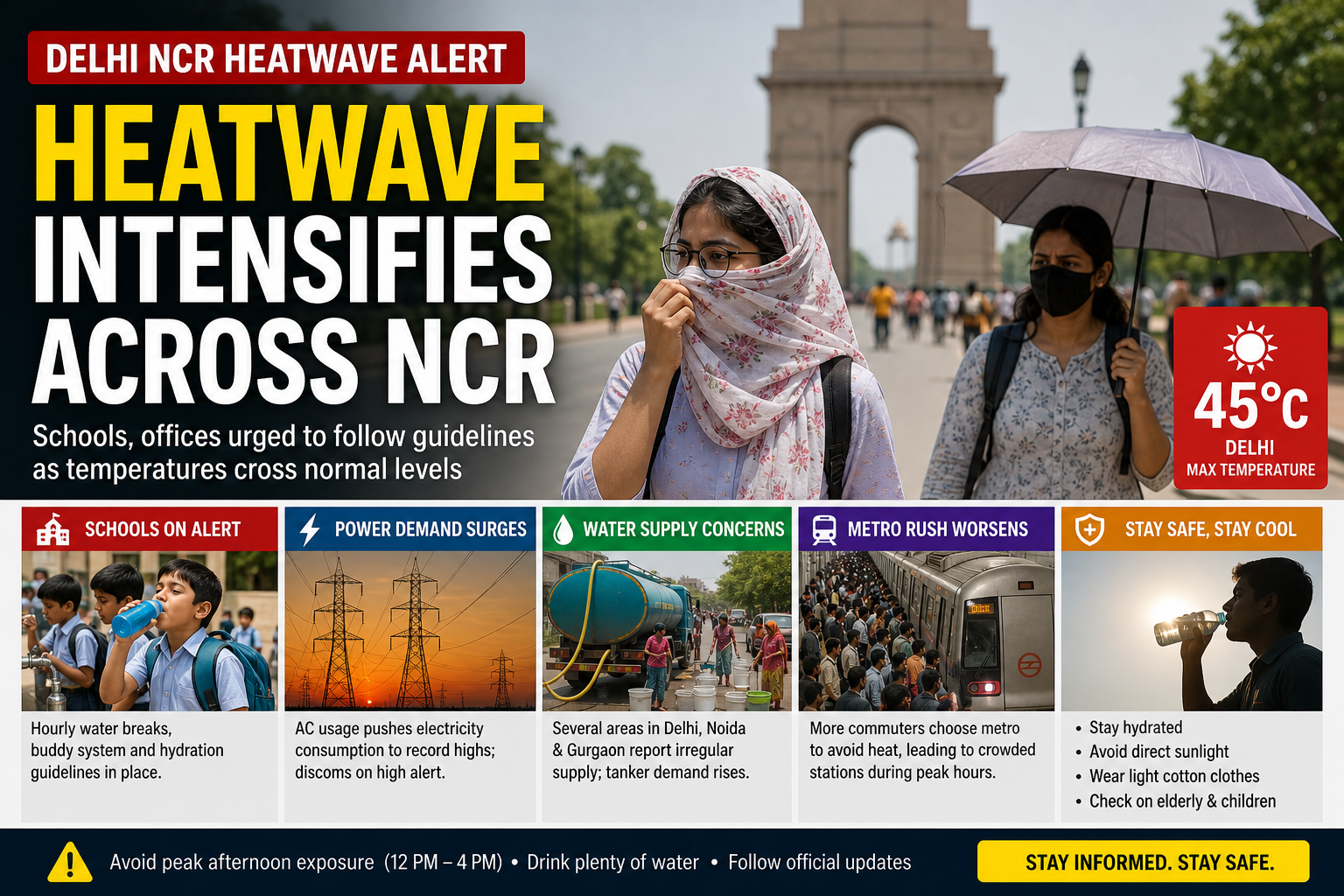

As temperatures climb across Delhi, daily commuting patterns are shifting in a visible way. The city’s metro network is witnessing heavier rush during peak hours, with more people choosing air-conditioned travel over road options in the summer heat.
The result is a noticeable increase in crowd density, particularly during office hours, as commuters look for relief from rising temperatures.
The surge is not just about numbers, it is about behavior. As heat levels rise, commuters are actively avoiding exposure to outdoor conditions.
Many who would otherwise use buses, autos, or two-wheelers are now turning to the Delhi Metro Rail Corporation network for a more comfortable journey.
At the same time, passengers tend to arrive earlier and wait longer inside stations, adding to platform congestion.
Rush hours in Delhi Metro have become more stretched during the summer.
The heaviest crowding is typically seen:
These windows now see higher-than-usual passenger density, especially on major corridors.
Certain interchange stations are under more pressure due to both connectivity and footfall.
Key hotspots include:
These locations act as both transit hubs and escape points from outdoor heat, which naturally increases crowd concentration.
The primary driver is simple: comfort.
With Delhi experiencing high daytime temperatures, commuters are choosing air-conditioned, predictable travel over uncertain and heat-exposed road journeys.
Students, office-goers, and daily commuters are all contributing to the shift, making peak hours more intense than usual.
The Delhi Metro Rail Corporation typically responds by adjusting operations during high-demand periods.
Measures include:
However, during extreme weather conditions, demand can still outpace capacity, leading to visible crowding.
For regular passengers, the difference is noticeable.
Trains are more crowded, waiting time on platforms feels longer, and interchanges are more congested. Even short-distance travel during peak hours can feel physically demanding despite air conditioning.
The metro remains efficient, but the comfort gap narrows as crowd levels rise.
For those relying on the metro, timing and planning are becoming more important.
Traveling slightly earlier or later than peak windows can make a significant difference. Choosing less crowded routes or avoiding major interchanges where possible can also ease the experience.
As long as the heatwave persists, high metro usage is expected to continue, keeping peak hours under pressure.
Because more people shift to air-conditioned metro travel to avoid heat, increasing passenger load during peak hours.
Rush hours are typically 8:30 AM to 11 AM and 5:30 PM to 8:30 PM, though summer conditions can extend these periods.
Major interchanges like Rajiv Chowk, Kashmere Gate, Central Secretariat, and Hauz Khas experience the highest crowd density.
Yes, the DMRC usually increases frequency and deploys additional staff, but demand can still remain high.
Traveling outside peak hours, avoiding major interchanges, and planning routes in advance can help reduce congestion.
Part of the NCR Guide editorial team, covering news, real estate, food and lifestyle across Delhi NCR.
Join thousands of Delhi NCR residents who start their day with our morning brief — top stories, real estate updates, events and deals.