Diwali Bingo: The Relatives Game, Free on Your Phone
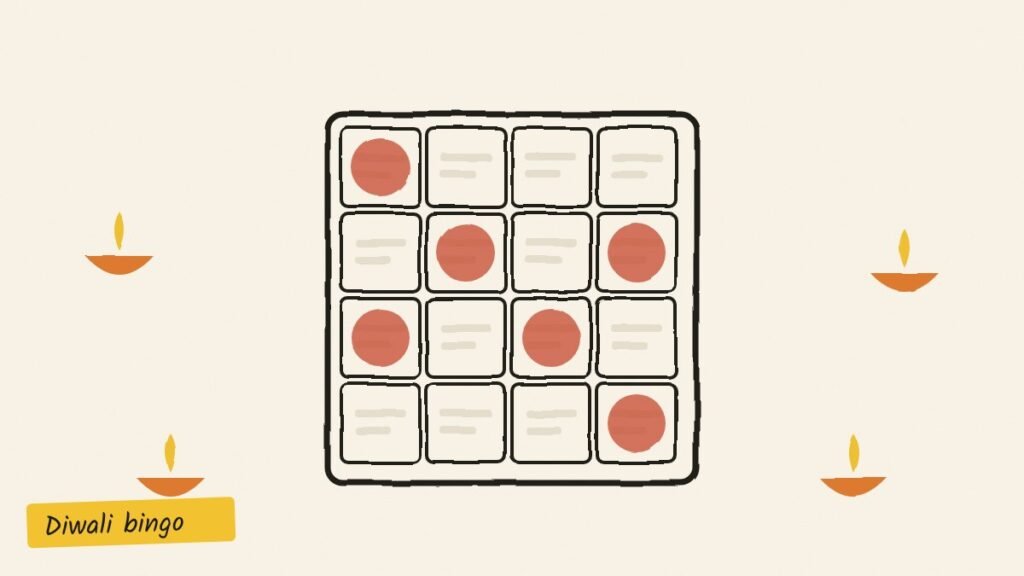
Every Diwali, someone asks when you’re getting married. Someone else asks about your marks or your salary, or tells you you’ve grown thin, and a box of soan papdi changes hands at least twice. Rishtedaar Bingo turns all of it into Diwali bingo: a bingo card of the things relatives always say, ticked off as you hear them, with your cousins racing you to BINGO on their own phones. It’s free, there’s nothing to print, and it works just as well at weddings and family lunches.
How to play Diwali bingo with your relatives
- Pick who you are this Diwali: Student, Single & working, Married, or Mummy-Papa. Your card is built from the questions people like you always get, mixed with the classics everyone hears.
- Listen, and tap. When a relative actually says it, tap that square. Things they do count too: the soan papdi box being passed on is a square. Tapped by mistake? Tap again to undo.
- Get four in a row. A full row, column or diagonal is BINGO. All 16 squares is a Full House.
- Share it. Send your card as a picture to the family group. Your card stays on your phone until you start a new one.
Racing your cousins live
Bingo is better as a race. Tap Race my cousins live and you get a private link to drop into the cousins’ WhatsApp group. Everyone who opens it gets their own card, and every phone shows who is closest to BINGO. It quietly adds a second layer to the evening: when a cousin is one square away, you’ll notice them steering conversations towards a certain uncle.
The room is private: only people with the link can join, and it closes after two days.
Which Diwali bingo card should you pick?
| Card | Best for | Why |
|---|---|---|
| Student | School and college students | Board marks, coaching, engineering or medical, and “what will you become?” |
| Single & working | Young professionals | Marriage, salary and rishta photos, often in the same breath |
| Married | Newly and not-so-newly married couples | “Good news?” questions, the in-laws and the first-Diwali gift |
| Mummy-Papa | Parents | The children’s weddings and jobs, gold prices, and the new car someone’s son just bought |
Every card also has the classics that land on everyone, which is why races between different cards still work.
House rules that make it more fun
- Honesty rule: it only counts if someone actually said it. No fishing for questions by asking “won’t you ask me about my marks?”
- Witness rule: for a big square, another cousin has to have heard it too.
- Full House prize: the first Full House gets the last kaju katli.
- Grown-ups play too: give the parents a Mummy-Papa card. They hear just as many questions, only different ones.
Keeping it kind
The game is affectionate, not a way to mock anyone at the table. Keep phones down when someone’s genuinely talking about something hard. Share cards with the cousins, not with the relative who said it. And if a grandparent asks what you’re laughing at, show them: most of them find it very funny.
More Diwali party games for the family
- Family quiz night with the Diwali Special round and “Diwali: who’s most likely to…?”, on the TV with everyone on their phones.
- A family games tournament for the long evening after the puja.
- Classic Ludo and Carrom, with Ludo house rules to settle arguments before they start.
Questions people ask
Do I need to print bingo cards?
No. Each card is on your phone. You can share it as a picture if you want to show it off.
How many people can play together?
As many cousins as are in the group. Each person opens the link and gets their own card.
Can we play at a wedding or a family lunch instead?
Yes. The questions relatives ask at weddings are mostly the same ones, just louder.
Does it cost anything?
No. It’s free, with no ads aimed at children and no sign-up.
Play Rishtedaar Bingo · More in Family Face-Off